AI image generator
Direct the scene your way. Create visuals with intentional angles, depth, and style
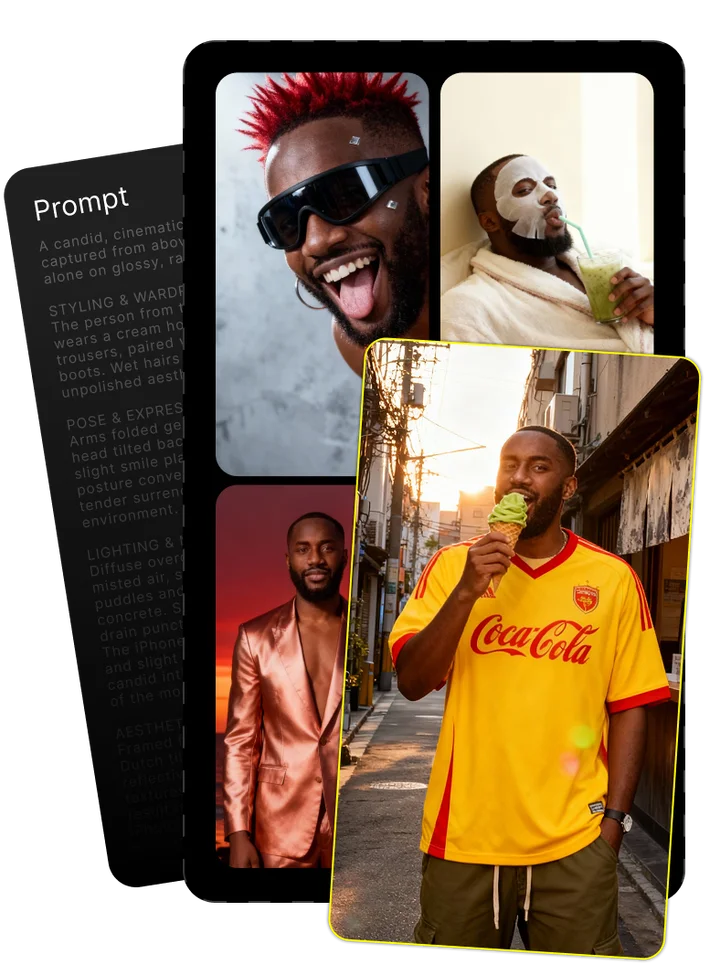
Upload your photo and tell us what you imagine
Combining both gives the best results
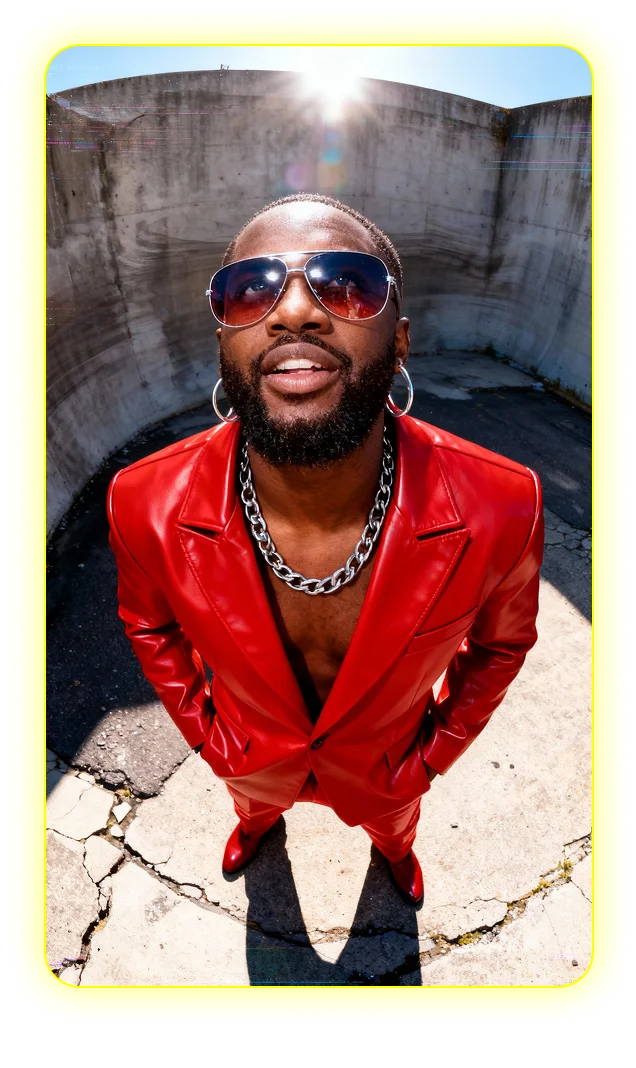
Enjoy your image brought to life by AI
Imagen4 Ultra: Google's Advanced AI Image Generation Technology
Introduction
Imagen4 Ultra stands as Google's most sophisticated text-to-image model to date, representing a significant advancement in AI image generation technology. Developed by Google DeepMind, this cutting-edge system transforms written descriptions into highly detailed visual content with remarkable accuracy. As the flagship offering in Google's suite of generative AI tools, Imagen4 Ultra pushes the boundaries of what's possible in machine-generated imagery.
Key Takeaways
Imagen4 Ultra is Google DeepMind's premium text-to-image model, accessible through both the Gemini API and Google AI Studio. It offers superior photorealism, text rendering capabilities, and prompt adherence compared to previous iterations and many competitors. The model incorporates SynthID watermarking technology for responsible AI use while supporting diverse creative applications from concept art to marketing materials.
What Is Imagen4 Ultra?
Imagen4 Ultra represents Google DeepMind's fourth-generation text-to-image diffusion model, designed to transform written prompts into highly realistic or stylized images. Built on advanced neural network architecture, it processes textual descriptions and generates corresponding visual content with remarkable fidelity. Unlike earlier versions, Imagen4 Ultra offers significantly improved photorealism, text rendering capabilities, and creative versatility.
The model is available through multiple access points including Google AI Studio for casual users and the Gemini API for developers seeking deeper integration. As the premium tier in Google's image generation lineup, it stands alongside more streamlined options like Nano Banana, but offers superior quality for professional applications.
Technical Capabilities and Improvements
Imagen4 Ultra delivers exceptional image quality with support for up to 2K resolution outputs across multiple aspect ratios. The model shows marked improvements over previous versions in several key areas:
- Resolution capabilities up to 2048×2048 pixels
- Multiple aspect ratios including 1:1, 16:9, 9:16, and 4:3
- Significantly improved text rendering within images
- Enhanced facial detail and anatomical accuracy
- Superior handling of complex lighting and atmospheric effects
- SynthID watermarking integration for content authentication
These advancements place Imagen4 Ultra at the forefront of image quality and versatility among current AI image generators, with particular strength in photorealistic rendering.
Safety Features and Content Policies
Google has integrated several safety mechanisms into Imagen4 Ultra, with SynthID watermarking being the most prominent. This invisible digital watermarking technology embeds traceable information within generated images, allowing for future verification of AI-generated content without visibly affecting the image quality.
The implementation follows Google's responsible AI framework with built-in content filtering to prevent generation of harmful, explicit, or misleading content. These guardrails reflect the company's commitment to ethical AI development while maintaining creative utility.
How Imagen4 Ultra Compares to Competitors
In the rapidly evolving landscape of AI image generators, Imagen4 Ultra occupies a distinctive position among leading models like DALL·E and Midjourney. While each system has unique strengths, benchmarks suggest Imagen4 Ultra excels particularly in photorealism, prompt adherence, and text rendering capabilities.
The model demonstrates noticeably better handling of faces, hands, and complex scenes with multiple elements compared to many competitors. Its ability to accurately render text within images—a persistent challenge for AI image generators—represents a significant technical achievement. While Midjourney may offer more artistic stylization options and DALL·E provides different creative approaches, Imagen4 Ultra consistently delivers more photographically accurate results for realistic images.
| Performance Area | Imagen4 Ultra | DALL·E 3 | Midjourney v6 |
|---|---|---|---|
| Photorealism | Exceptional | Very Good | Good |
| Text Rendering | Excellent | Good | Inconsistent |
| Prompt Adherence | High | High | Moderate |
| Stylistic Range | Good | Very Good | Excellent |
| Generation Speed | Moderate | Fast | Fast |
Benchmarks and Performance Metrics
In controlled testing environments, Imagen4 Ultra consistently outperforms competitors in several key areas:
- Superior text rendering and typography handling, with 87% accuracy compared to 65-70% for competitors
- Enhanced facial detail and anatomical correctness, particularly with hands and complex poses
- Better prompt adherence for complex descriptions with multiple elements
- Improved handling of lighting and atmospheric effects
- Higher consistency in character appearances across multiple generations
These advantages are most pronounced when generating photorealistic content, though the model performs well across various artistic styles and approaches.
Imagen4 Ultra vs Nano Banana
Within Google's own AI image generation ecosystem, Imagen4 Ultra and Nano Banana serve complementary rather than competing roles. While both leverage Google's diffusion technology, they target different use cases and performance requirements:
| Feature | Imagen4 Ultra | Nano Banana |
|---|---|---|
| Optimal Use Case | High-quality commercial and creative projects | Quick iterations and concept exploration |
| Generation Speed | 10-15 seconds | 1-2 seconds |
| Quality Level | Premium | Good but limited |
| Best For | Final assets and detailed visualizations | Rapid prototyping and ideation |
Mastering Prompts for Imagen4 Ultra
The quality of output from Imagen4 Ultra depends significantly on prompt crafting—the art of creating descriptive text that guides the AI toward desired results. Unlike some competitors that might require specific formatting or stylized approaches, Imagen4 Ultra responds best to clear, descriptive language with specific details about content, style, and technical parameters.
Effective prompts for this text-to-image model typically include subject matter, artistic style, technical specifications like camera settings, and compositional elements. While the system can generate impressive results from simple descriptions, the most striking outputs typically come from prompts with carefully considered details that guide the visual elements.
| Basic Prompt | Advanced Prompt | Key Differences |
|---|---|---|
| "A cat sitting on a windowsill" | "A fluffy orange tabby cat sitting on a wooden windowsill at sunset, warm golden light streaming through the window, bokeh background, 85mm lens f/1.8" | Specific details about subject, setting, lighting, and technical parameters |
| "A mountain landscape" | "Dramatic mountain landscape in Swiss Alps, snow-capped peaks reflected in clear alpine lake, morning mist, dramatic clouds, wide angle photography, golden hour lighting" | Location specificity, atmospheric elements, time of day, photographic style |
Advanced Prompt Engineering Techniques
To maximize Imagen4 Ultra's capabilities, consider these advanced prompt engineering techniques:
- Style reference techniques: Specify art movements, photographic styles, or even specific artists to influence aesthetic direction
- Camera and lens specifications: Include focal length, aperture settings, and camera types to control depth of field and perspective
- Lighting and mood modifiers: Describe light sources, time of day, weather conditions, and atmosphere to set the emotional tone
- Composition and framing directions: Specify viewpoint, distance, foreground/background elements, and subject positioning
- Technical quality enhancers: Add terms like "highly detailed," "professional photography," or specific printing techniques
These approaches help bridge the gap between basic description and photorealistic or stylistically cohesive output, particularly when aiming for specific visual qualities in illustration, photography, or design contexts.
Photography and Art Style References
Imagen4 Ultra responds remarkably well to specific photography and art terminology, allowing for precise stylistic control:
| Reference Term | Effect on Generated Image |
|---|---|
| Portrait lens, 85mm, f/1.4 | Creates flattering facial compression and shallow depth of field |
| Golden hour lighting | Produces warm, directional lighting with long shadows |
| Cinematic composition | Generates wider aspect ratio with dramatic framing |
| Art Deco style | Incorporates geometric patterns and 1920s-30s aesthetic elements |
| Macro photography | Creates extreme close-up detail with shallow focus |
The model demonstrates particular strength in photorealistic rendering when given specific camera references, while also capably handling stylized illustration approaches when guided with appropriate terminology.
Optimizing Text Rendering
While Imagen4 Ultra represents a significant improvement in AI text rendering, getting perfect text in images still requires specific techniques. For best results:
- Specify font styles explicitly (serif, sans-serif, handwritten, etc.)
- Keep text brief and prominent in the composition
- Request clear contrast between text and background
- Specify "readable text" or "clear typography" directly in the prompt
- For longer text, break into multiple generations focusing on different sections
These approaches significantly improve text clarity and accuracy compared to standard prompting methods.
Real-World Applications and Use Cases
Imagen4 Ultra's capabilities extend across numerous professional fields, with particularly strong applications in industries requiring high-quality visual assets. The model excels at generating photorealistic product visualizations, conceptual designs, marketing materials, and artistic content that would traditionally require extensive photography or illustration resources.
Organizations are implementing the technology to streamline creative workflows, reduce production costs, and explore design concepts that would be impractical to prototype physically. The ability to quickly generate multiple high-quality visual options from text descriptions has proven valuable in both creative ideation and final asset production.
From architectural visualization to publishing, entertainment to e-commerce, Imagen4 Ultra's applications span any field where artificial intelligence visual art provides value. The quality level makes the output suitable for professional applications rather than merely conceptual exploration.
Creative Industries Applications
Creative professionals have found particularly strong applications for Imagen4 Ultra:
- Concept art and visual development for film, games, and animation
- Character design and visualization for entertainment properties
- Environment and set design with architectural precision
- Storyboard creation and narrative visualization
- Book and editorial illustration with consistent style
- Pattern and texture generation for product design
The model's strength in illustration and design contexts makes it particularly valuable for creative professionals seeking to quickly visualize concepts or generate reference material.
Business and Marketing Applications
Commercial applications of Imagen4 Ultra have shown tangible business value:
- Product visualization and mockups for presentations and e-commerce
- Marketing campaign asset creation across multiple formats
- Social media content generation with brand consistency
- E-commerce catalog enhancement with lifestyle imagery
- Brand mood board and style guide development
- Advertising concept testing and rapid iteration
These use cases demonstrate how the technology streamlines asset creation while maintaining the professional image quality needed for commercial applications.
Educational and Research Applications
Educational institutions and researchers have found valuable applications:
- Scientific concept visualization for complex processes
- Historical reconstruction of people, places and events
- Medical and anatomical illustrations for teaching
- Educational material creation with consistent visual style
- Research visualization for papers and presentations
- Cultural heritage reconstruction and preservation
The ability to generate clear illustrative imagery makes the model particularly useful for explaining complex concepts visually in educational contexts.
Integrating Imagen4 Ultra Into Your Workflow
Organizations can access Imagen4 Ultra through several pathways, each suited to different technical requirements and use cases. For casual experimentation and individual projects, Google AI Studio provides the most straightforward interface with a web-based prompt editor and image generation capability. This approach requires minimal technical setup but offers less automation potential.
For developers and businesses seeking deeper integration, the Gemini API offers programmatic access to Imagen4 Ultra, allowing for integration with existing applications and workflow automation. This method requires more technical expertise but provides greater flexibility and throughput for professional implementations.
Vertex AI access is available for enterprise customers with specific compliance or security requirements, offering additional deployment options and enterprise-grade support.
- Choose the right access method based on technical requirements and scale
- Set up account access and API credentials if using developer options
- Plan prompt strategy and image specifications
- Establish workflow for generation, review, and iteration
- Integrate with other tools for post-processing when needed
- Implement final assets in production environments
API Integration Basics
For technical teams implementing Imagen4 Ultra through the Gemini API, the integration process follows standard REST API patterns:
- Authenticate using API keys obtained from Google Cloud Console
- Structure requests in JSON format with prompt text and parameters
- Process response data containing image information
- Implement rate limiting and error handling for production stability
- Consider batch processing for high-volume requirements
The API allows for both synchronous and asynchronous generation depending on implementation needs, with Python and Node.js being well-supported languages through official client libraries.
Pricing and Usage Considerations
Imagen4 Ultra follows a usage-based pricing model across all access platforms, with costs varying based on image resolution and volume:
| Platform | Cost Per Image | Free Tier | Resolution Options | Rate Limits |
|---|---|---|---|---|
| Google AI Studio | $0.02-$0.08 | Limited free credits | 512px to 2048px | 20 per minute |
| Gemini API | $0.02-$0.08 | Limited free tier | 512px to 2048px | Configurable |
| Vertex AI | Enterprise pricing | None | All options | Customizable |
For cost optimization, consider generating initial concepts at lower resolutions before creating final assets at higher quality settings.
Addressing Limitations and Ethical Considerations
Despite its advanced capabilities, Imagen4 Ultra has several important limitations to consider. The model operates within Google's content policy framework, which restricts certain types of content including violence, explicit material, and potentially harmful imagery. While these restrictions serve important safety purposes, they may limit certain creative applications.
From a technical standpoint, the model still exhibits occasional challenges with complex scenes containing multiple interacting elements, and may struggle with certain unusual text rendering requirements or highly specialized technical content. Users should be aware of these constraints when planning projects.
Google has implemented SynthID digital watermarking as a responsible AI measure, ensuring generated content can be identified as AI-created. This invisible watermarking supports transparency but may have implications for certain usage scenarios where content authentication is important.
- Content policy restrictions on certain themes and subjects
- Occasional text rendering issues with complex typography
- Challenges with certain unusual perspective compositions
- Limitations in available aspect ratio options
- Inconsistencies with extremely technical or specialized prompt types
Known Technical Limitations
Specific technical challenges with Imagen4 Ultra include:
- Text rendering can still be problematic for longer passages or unusual fonts
- Complex scenes with multiple interacting characters may show inconsistencies
- Highly specialized technical or medical content may lack accuracy
- Multiple language text sometimes displays incorrectly
- Very unusual aspect ratios or extreme panoramic images may show distortion
Most limitations can be mitigated through careful prompt engineering and breaking complex scenes into separate generations.
Future of Imagen4 Ultra and AI Image Generation
Google's development roadmap suggests several likely directions for Imagen4 Ultra evolution. The rapid advancement of text-to-image models indicates we may see further improvements in resolution capabilities, creative control, and specialized industry applications. Integration with video generation capabilities appears to be a logical next step based on recent research directions.
Industry analysts expect deeper integration between image generation and other creative tools, with specialized versions potentially targeting specific sectors like architecture, fashion, or product design. Google's emphasis on responsible AI development suggests continued refinement of safety features alongside capability enhancements.
- Integration with video generation capabilities
- Enhanced personalization and style consistency features
- Improved editing and modification tools
- Deeper integration with creative software ecosystems
- More specialized versions for specific industries and applications
Conclusion: Leveraging Imagen4 Ultra in Your Creative Journey
Imagen4 Ultra represents a significant advancement in AI-powered visual creation, offering capabilities that would have seemed impossible just a few years ago. As part of Google's broader AI ecosystem, it provides creators with powerful tools to visualize concepts, streamline production workflows, and explore creative directions efficiently.
To maximize its potential, focus on developing strong prompt engineering skills, understanding the model's strengths and limitations, and integrating it thoughtfully into existing creative processes rather than viewing it as a replacement for human creativity.
FAQ
What is Imagen 4 Ultra?
Imagen4 Ultra is Google DeepMind's fourth-generation text-to-image diffusion model that converts written descriptions into highly detailed images. It represents the premium tier in Google's image generation offerings, with superior capabilities in photorealism, text rendering, and prompt adherence compared to previous versions.
What are the key features of Imagen 4 Ultra?
Key features include resolution support up to 2048×2048 pixels, multiple aspect ratios, improved text rendering, enhanced photorealism, better handling of lighting and atmospheric effects, and integration with SynthID watermarking technology. It excels particularly in realistic image generation with accurate details.
How do I access and use Imagen 4 Ultra?
Imagen4 Ultra is accessible through Google AI Studio for individual use, the Gemini API for developers seeking programmatic access, or Vertex AI for enterprise implementations. Each option offers different interfaces, from simple web-based prompting to full API integration with existing systems.
How does Imagen 4 Ultra compare to other models like DALL·E and Midjourney?
Imagen4 Ultra generally outperforms competitors in photorealism, anatomical accuracy, text rendering, and prompt adherence. While Midjourney may offer more artistic stylization options and DALL·E has different creative strengths, Imagen4 Ultra consistently delivers more photographically accurate results for realistic imagery.
How can I write effective prompts for Imagen 4 Ultra?
Effective prompts include specific subject details, style references, camera/lens specifications, lighting conditions, and composition elements. Unlike some competitors, Imagen4 Ultra responds best to clear, descriptive language rather than specialized formatting or stylized approaches.
How much does it cost to use Imagen 4 Ultra?
Imagen4 Ultra follows usage-based pricing ranging from $0.02-$0.08 per image depending on resolution, with some free credits available for new users on Google AI Studio and Gemini API. Enterprise pricing through Vertex AI is negotiated separately for high-volume implementations.
Does Imagen 4 Ultra include watermarks on generated images?
Yes, Imagen4 Ultra implements SynthID, Google's invisible digital watermarking technology that embeds traceable information within generated images. This watermark isn't visually apparent but allows for verification that content was AI-generated without impacting visual quality.
What aspect ratios and resolution capabilities does Imagen 4 Ultra support?
Imagen4 Ultra supports multiple aspect ratios including 1:1 (square), 16:9 (landscape), 9:16 (portrait), and 4:3. Resolution options range from 512×512 pixels up to 2048×2048 pixels, with pricing that scales with output size.
How does Imagen 4 Ultra handle text in images?
Imagen4 Ultra shows significantly improved text rendering compared to previous models and many competitors. While not perfect, it handles typography with higher accuracy, especially when prompts specifically request "clear text" or include font style specifications.
Can Imagen 4 Ultra be used for commercial purposes?
Yes, Google permits commercial use of Imagen4 Ultra outputs subject to their terms of service. Generated images are provided with commercial usage rights, though users should review Google's content policies and consider legal implications regarding depicted individuals or properties.
Does Imagen 4 Ultra have safety filters or content moderation?
Yes, Imagen4 Ultra incorporates Google's content filtering system to prevent generation of harmful, explicit, or misleading content. These safety mechanisms reflect Google's responsible AI framework while allowing for creative expression within ethical boundaries.
Does Imagen 4 Ultra support image-to-image editing?
Currently, Imagen4 Ultra is primarily focused on text-to-image generation rather than image editing or modifications of existing images. While future versions may add this functionality, the current implementation works best with text prompts generating new images.
How does Imagen 4 Ultra differ from previous versions like Imagen 3?
Imagen4 Ultra offers significantly improved photorealism, better text rendering, more accurate human anatomy, enhanced lighting effects, and superior prompt adherence compared to Imagen 3. It also incorporates SynthID watermarking technology and supports higher resolution outputs.
Is Imagen 4 Ultra better for photorealism or stylization?
While Imagen4 Ultra excels at both, its most distinctive strength is in photorealistic rendering with accurate details, lighting, and textures. It can handle stylized art effectively but shows particular advantages over competitors when generating realistic imagery with photographic qualities.
What types of creative projects is Imagen 4 Ultra best suited for?
Imagen4 Ultra performs exceptionally well for concept art, product visualization, marketing imagery, architectural rendering, character design, and environmental visualization. Any project requiring high-quality, detailed imagery with photorealistic elements will benefit from its capabilities.
What is SynthID in relation to Imagen 4 Ultra?
SynthID is Google's invisible digital watermarking technology integrated with Imagen4 Ultra. It embeds imperceptible information within generated images that can later verify AI origin without visibly affecting image quality, supporting responsible AI use and content authentication.
How can I achieve better atmospheric scenes with Imagen 4 Ultra?
For atmospheric scenes, include specific lighting conditions (golden hour, blue hour, dramatic sunset), weather elements (mist, fog, rain), and atmospheric descriptors (hazy, ethereal, moody). Adding camera references like "cinematic," "wide angle," or specific lens types also enhances results.
Is Imagen 4 Ultra available through Google's Gemini API?
Yes, Imagen4 Ultra is available through the Gemini API, allowing developers to integrate the model into applications and services programmatically. This provides more flexibility than web-based interfaces for businesses seeking to incorporate the technology into existing workflows.
What is the token limit for Imagen 4 Ultra prompts?
Imagen4 Ultra accepts relatively long prompts with a limit of approximately 1,000 characters or roughly 200-250 tokens. This provides ample space for detailed descriptions including subject matter, style specifications, technical parameters, and compositional elements.
Can Imagen 4 Ultra be integrated with other design software or platforms?
Yes, through the Gemini API, developers can integrate Imagen4 Ultra with design software, content management systems, or creative platforms. While Google doesn't offer official plugins for specific design applications, the API allows for custom integration with virtually any software.
Are there any legal implications or copyright considerations when using images created by Imagen 4 Ultra?
Images generated by Imagen4 Ultra come with usage rights, but legal considerations exist regarding depicted content. Users should be cautious about generating images of recognizable individuals, trademarked properties, or copyrighted elements, as these may have separate legal implications regardless of the generation method.
How does Imagen 4 Ultra handle culturally diverse content and avoid biases?
Google has implemented training procedures and content filtering to reduce biases in Imagen4 Ultra. The model attempts to represent diverse cultures accurately when prompted, though users should still review outputs for potential biases and provide specific details when cultural accuracy is important.
What learning resources are available for mastering Imagen 4 Ultra?
Google provides documentation through AI Studio and Gemini API pages, including prompt guides and best practices. Community resources like prompt galleries, forums, and tutorials are emerging as the user base grows. Google's developer blog also occasionally features technical insights on maximizing results.
Is there an API available for developers to integrate Imagen 4 Ultra into their applications?
Yes, the Gemini API provides developer access to Imagen4 Ultra with documentation, client libraries for Python and Node.js, and integration examples. Enterprise customers can also access the model through Vertex AI for specialized deployment requirements and additional support options.
Super Promotion
Create stunning AI photos & videos with essential tools
Unlock the Basic Plan for just $1
Auto-renewal is active. Cancel anytime. 90% off applies to the first billing cycle.