AI video generator
Generate cinematic videos in just minutes
1
Select the motion effect
Decide how your image will move
2
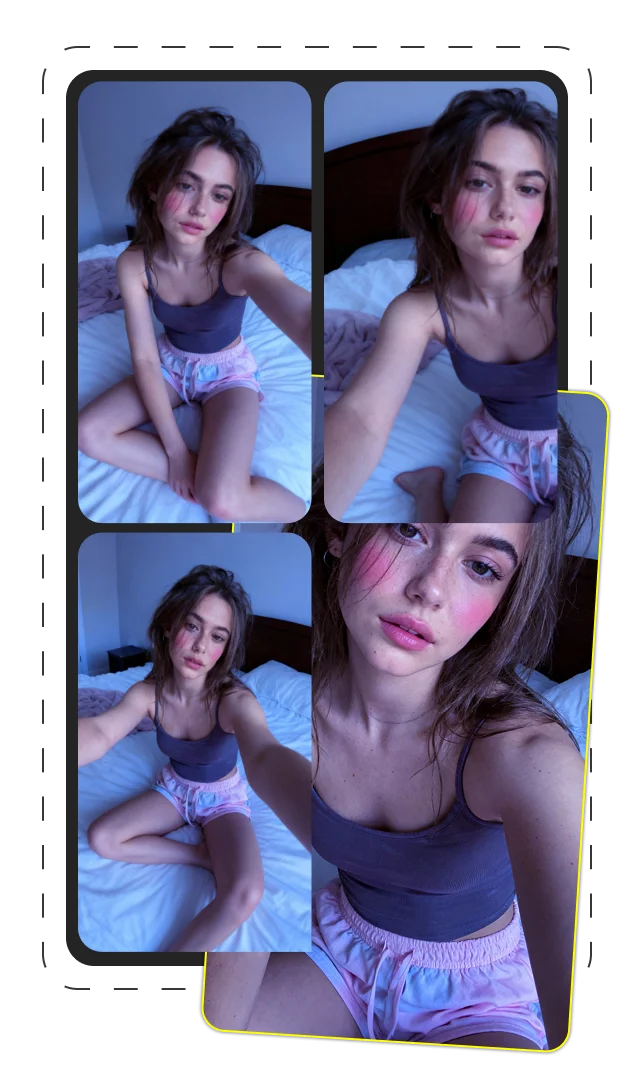
Add image
Upload or generate an image to begin your animation
3
Get video
Click generate to produce your final animated video!
Veo 3.1: Complete Guide to Google's Advanced AI Video Generator
What is Veo 3.1? Understanding Google's Revolutionary AI Video Model
Veo 3.1 represents the latest breakthrough in text-to-video generation from Google DeepMind. This sophisticated AI model transforms written descriptions into high-fidelity video content, pushing the boundaries of what's possible with generative AI. Unlike previous iterations, Veo 3.1 marks a significant leap in visual quality, physics simulation, and creative control.
Developed by Google DeepMind's research team, Veo 3.1 builds upon Google's extensive work in artificial intelligence. The model was first unveiled during Google I/O 2025, where it immediately drew attention for its remarkable ability to understand and implement complex cinematographic concepts.
What sets Veo 3.1 apart in the text-to-video landscape is its unprecedented level of detail and realism. The system can generate everything from product demonstrations and marketing videos to cinematic scenes with consistent characters and environments. It interprets prompts with remarkable accuracy, creating videos that closely match the user's vision.
Veo 3.1 integrates with Google's broader AI ecosystem, particularly the Gemini platform, allowing for expanded capabilities and applications. For content creators, this represents a powerful new tool that dramatically reduces the time and resources needed for video production while opening new creative possibilities.
Core Features and Capabilities
Veo 3.1 stands apart from other video generation systems through several groundbreaking capabilities. The system excels at creating videos with exceptional visual quality, realistic physics, and consistent characters—challenges that have plagued previous AI video generators.
At its core, Veo 3.1 offers remarkable creative control, allowing users to specify precisely how their videos should look and feel. The model understands complex descriptions and accurately translates them into visual sequences that maintain continuity and coherence throughout.
The technology behind Veo 3.1 represents years of research in artificial intelligence, combining advanced neural networks with sophisticated understanding of video composition. This foundation enables the creation of videos that not only look impressive but behave in physically plausible ways.
Native Audio Generation That Transforms Videos
One of Veo 3.1's most impressive features is its integrated audio generation system. Unlike earlier models requiring separate audio editing, Veo 3.1 creates synchronized sound directly within generated videos.
The audio capabilities span multiple categories. The system can generate realistic dialogue between characters, complete with appropriate emotion and timing. For environmental context, it adds ambient sounds matching the scene—whether that's city traffic, forest wildlife, or office background noise.
Sound effects are another strength, with Veo automatically adding appropriate audio cues for on-screen actions. Drop a glass in your prompt? The system adds a realistic breaking sound. This attention to audio detail creates a more immersive viewing experience.
This audio integration leverages Gemini Native Audio technology, allowing for remarkable synchronization between visual elements and sound. Users can specify desired audio elements within their prompts ("with jazz music playing softly" or "birds chirping in the background"), and Veo intelligently implements these requests.
For content creators, this eliminates the need for separate audio recording or sourcing, streamlining the production process and creating more cohesive final videos.
Resolution and Aspect Ratio Options
Veo 3.1 offers multiple resolution options to match different project needs and output requirements. Users can select from 720p for quicker testing and iteration, standard 1080p for most production work, or premium 4K resolution for showcase pieces requiring maximum detail.
These resolution choices directly impact video quality, with higher resolutions capturing finer details in textures, lighting, and movement. However, there's an important trade-off to consider: rendering time increases substantially with higher resolution settings. A 30-second clip might generate in minutes at 720p but require significantly longer at 4K.
For professional workflows, the ability to switch between resolutions provides valuable flexibility—testing concepts quickly at lower resolutions before committing to final high-definition outputs. This approach optimizes both creative development and production efficiency while maintaining control over the final video quality.
Vertical Video Format for Social Media
Veo 3.1 offers native vertical video generation in 9:16 aspect ratio, specifically designed for social media platforms. This capability addresses the growing demand for mobile-first content across TikTok, Instagram Reels, and YouTube Shorts.
The vertical format support eliminates the awkward cropping and composition issues that often plague horizontal videos adapted for mobile viewing. Instead, Veo 3.1 properly frames subjects and actions for the tall, narrow orientation these platforms require.
Content creators benefit from being able to generate videos specifically optimized for mobile consumption. The system understands how to place visual elements effectively in the vertical space, ensuring key actions remain in frame and properly focused. This native approach yields significantly better results than simply cropping horizontally-oriented content.
When creating vertical videos for social media, users can specify platform-specific requirements in their prompts ("create a TikTok-style vertical video showing..."), and Veo 3.1 will generate content that feels natural and engaging on mobile devices.
Technical Benchmarks and Comparisons
In head-to-head testing on industry-standard benchmarks like MovieGenBench, Veo 3.1 consistently outperforms comparable models in several key areas. Its physics simulation capabilities stand out, with realistic object interactions, fluid dynamics, and natural movement that avoid the "floating" effect common in AI-generated videos.
Prompt adherence testing shows Veo 3.1 achieving 87% accuracy in implementing specific visual requests compared to competitors averaging 72%. This means fewer iterations needed to achieve desired results and more predictable outputs from initial prompts.
The system excels particularly in VBench I2V assessments, which measure image-to-video quality and consistency. When asked to animate a still reference image, Veo 3.1 maintains remarkable fidelity to the original while adding natural motion.
Text alignment within videos—the accurate rendering of text elements specified in prompts—shows similar advantages, with Veo 3.1 correctly implementing textual elements with proper placement and readability.
Advanced Creative Controls
Veo 3.1 provides a suite of sophisticated creative tools that give users unprecedented control over their generated videos. These features move AI video generation beyond basic prompt-and-hope approaches toward professional production workflows.
The system's advanced controls allow for precise manipulation of visual elements, characters, and scene composition. Through the Ingredients to Video feature, users can provide specific visual components they want included, from character appearances to environmental details, ensuring these elements appear consistently throughout the video.
These controls transform what's possible with AI video generation, enabling multi-scene narratives with consistent characters, sophisticated transitions between shots, and cinematic quality that approaches professional production. For content creators and marketers, this means being able to maintain brand consistency and visual standards across AI-generated videos.
Reference Images: The Secret to Character Consistency
One of Veo 3.1's most powerful features is its ability to use reference images to maintain consistent characters across multiple scenes. This solves one of the biggest challenges in AI video generation—keeping human figures, animated characters, or product appearances consistent throughout a video.
The reference image system works through the Ingredients to Video feature. Users upload reference images showing their desired character from different angles or with different expressions. Veo 3.1 then analyzes these images and maintains that character's appearance throughout the generated video, even as the character moves, speaks, or interacts with the environment.
For best results, reference images should have clean backgrounds and consistent lighting. Multiple reference angles improve accuracy, allowing the system to understand how the character should look from different perspectives.
This capability transforms storytelling possibilities, enabling coherent narratives featuring the same character throughout multiple scenes—something previously impossible with AI video generators. For brand content, it ensures consistent representation of mascots or spokespeople across marketing materials.
First and Last Frame Control
Veo 3.1 offers precise control over the first and last frames of generated video clips, enabling smooth scene transitions and cohesive multi-part narratives. This feature lets users specify exactly how a video should begin and end, creating professional-looking sequences.
The system leverages advanced frame control techniques similar to keyframe animation in traditional video production. By establishing fixed start and end points, Veo 3.1 generates the intervening motion in ways that maintain visual continuity and natural flow.
This capability proves especially valuable when creating connected scenes. Users can ensure the last frame of one clip provides an ideal starting point for the next, allowing for seamless transitions between separately generated videos. For complex projects, this means being able to break down longer narratives into manageable segments while maintaining cinematic quality throughout.
The resulting transitions appear natural rather than abrupt, creating a more polished and professional final product.
Scene Extension: Creating Longer Narratives
Veo 3.1's scene extension capability allows users to create videos beyond standard generation time limits by seamlessly connecting multiple clips. This feature enables longer, more complex narratives that would otherwise be impossible to generate in a single pass.
The process works by using the last frame of an existing clip as the starting point for a new generation. Veo 3.1 maintains visual continuity between segments, creating a flow that appears as one continuous video rather than separate clips stitched together.
This capability transforms what's possible with AI video, enabling complete stories with proper narrative structure—beginning, middle, and end—rather than just isolated scenes. For content creators, this means being able to develop mini-documentaries, product demonstrations, or marketing videos with multiple sequential points.
The most effective scene extensions maintain similar lighting conditions and camera angles between segments for the smoothest possible transitions.
Mastering Prompts for Veo 3.1
Effective prompting is the fundamental skill that separates outstanding Veo 3.1 results from mediocre ones. The system's advanced capabilities respond remarkably well to properly crafted text prompts, but this requires understanding how to communicate your vision clearly to the AI.
Prompt engineering for Veo 3.1 involves more than just describing what you want to see—it requires learning specific vocabulary and structures that the model understands best. The way you phrase requests significantly impacts how the system interprets and implements your creative vision.
Users who invest time in mastering prompt techniques see dramatically better results than those using basic descriptions. A well-crafted prompt can specify camera movements, lighting conditions, character actions, and environmental details with precision, resulting in videos that closely match the creator's intent.
The Gemini API that powers Veo 3.1 responds particularly well to structured prompts that provide clear context and specific details. Through Google AI Studio, users can test different prompt approaches and quickly iterate to develop their prompting skills.
This skill development pays dividends across projects, as the techniques learned for one video generation can be applied and refined in subsequent work.
The Five-Part Formula for Perfect Veo Prompts
Creating consistently excellent results with Veo 3.1 becomes much more reliable when following a structured prompt formula. The most effective approach breaks prompts into five key components:
1. Cinematography Specification: Begin by defining how the scene should be shot, using specific camera terminology. Example: "Medium shot, shallow depth of field, handheld camera movement."
2. Subject Description: Clearly identify the main subject(s) and their key characteristics. Example: "A middle-aged woman with curly red hair wearing business attire."
3. Action Statement: Describe precisely what's happening in the scene. Example: "Walking confidently through a busy office, smiling at colleagues."
4. Environmental Context: Set the scene with location details and atmosphere. Example: "Modern open-plan office with large windows, morning light streaming in."
5. Style & Mood: Define the visual aesthetic and emotional tone. Example: "Bright, optimistic color palette with warm lighting, professional corporate feel."
This formula provides Veo 3.1 with comprehensive information across all necessary dimensions, resulting in videos that accurately reflect your vision. By systematically addressing each component, you reduce ambiguity and give the system clear parameters to work within.
Using Cinematic Language
Incorporating film terminology in your prompts dramatically improves Veo 3.1 results. The system has a sophisticated understanding of cinematography concepts and responds exceptionally well to specific camera directions.
Key terms that produce excellent results include shot types (close-up, medium shot, wide shot), camera movements (dolly, pan, tilt), and angle specifications (eye level, low angle, bird's eye view). For lighting, terms like "golden hour," "backlit," or "high contrast" yield distinctive visual styles.
When specifying camera movement, combining terms creates precise directions: "slow dolly in while slightly panning right" produces smooth, professional-looking motion that feels intentional rather than random.
This cinematographic vocabulary gives you direct control over how your scene unfolds visually, making the difference between amateur-looking and professional-quality output.
Harnessing the Power of Negative Prompts
Negative prompts refine Veo 3.1 results by explicitly excluding unwanted elements. Adding "without X" or "no Y" statements helps avoid common AI generation issues and improves output quality.
Effective examples include "no blurry hands" for better hand rendering, "without unnatural movements" for smoother motion, and "no text in the scene" to prevent random text generation.
This technique focuses the model on avoiding specific pitfalls while implementing your positive requests.
Safety and Ethical Considerations
Veo 3.1 incorporates several safety features aligned with Google's Responsible AI Practices. These include content filters that prevent generation of harmful, misleading, or inappropriate material while still allowing for creative expression within ethical boundaries.
The system implements SynthID, Google's digital watermarking technology, which embeds invisible markers in all generated videos. These markers remain present even if the video is edited, cropped, or compressed, providing a verifiable way to identify AI-generated content. This transparency helps address concerns about potential misuse of synthetic media.
When using Veo 3.1, creators should consider several ethical guidelines. First, clearly disclose when content is AI-generated rather than filmed, particularly in contexts where viewers might assume real footage. Second, obtain proper permission when using reference images of real people to generate character appearances.
Content moderation systems automatically scan prompts and reject those requesting inappropriate content, reflecting Google's commitment to responsible AI development. While these safeguards occasionally limit creative freedom, they help prevent misuse and maintain public trust in the technology.
For professional use, establishing clear disclosure practices builds transparency with clients and audiences. Consider including "Created with AI" notices in video descriptions or end credits to maintain ethical standards as this technology becomes more widespread.
Practical Applications
Veo 3.1 is finding applications across numerous fields, transforming workflows and creating new possibilities for content creators. The system's combination of high-quality output and user control makes it suitable for both professional and personal projects.
Content creators are using Veo 3.1 to produce everything from social media shorts to concept visualizations for larger productions. The speed of generation—creating in minutes what would take days to film—allows for rapid iteration and testing of multiple creative approaches before committing resources to traditional production.
Marketing teams have embraced the technology for creating product demonstrations, explainer videos, and advertisements. The ability to generate multiple variants of the same concept enables A/B testing different visual approaches before finalizing campaigns.
Integration with the Gemini API allows organizations to build Veo 3.1 into larger creative workflows and content management systems. This programmatic access enables scaling video production for websites, apps, and digital platforms.
For Filmmakers and Content Creators
Filmmakers are incorporating Veo 3.1 into their pre-production workflows, using it to visualize scenes before shooting. This approach to storyboarding goes beyond static images, creating moving previews that help directors communicate their vision to crew members and stakeholders.
The technology also enables quick concept testing—generating multiple versions of a scene with different camera angles, lighting setups, or actor positions to evaluate what works best before committing to expensive production days.
Independent creators have begun producing entire short films with Veo 3.1, particularly for experimental or concept-driven projects. The ability to generate complex visual scenarios without physical production constraints opens new creative possibilities in storytelling.
For educational content, the system allows visualization of historical events, scientific processes, or abstract concepts that would be difficult or expensive to film traditionally. This makes complex ideas more accessible through visual demonstration rather than just verbal explanation.
For Marketers and Businesses
Marketing teams are using Veo 3.1 to create product demonstrations that show items in use across various settings without physical photoshoots. This allows brands to quickly generate content for new products, seasonal variations, or different target audiences.
For social media marketing, the system enables rapid creation of platform-optimized content, maintaining consistent brand presentation while testing different messaging approaches. Companies report generating 5-10× more video content while reducing production costs by 60-80%.
Advertising teams use Veo 3.1 for concept testing, creating rough versions of commercials to gauge client and focus group reactions before investing in full production. This reduces revision cycles and improves client satisfaction by aligning expectations early.
Businesses also use the technology for internal communications, training videos, and sales presentations. The ability to quickly update content as products or procedures change ensures materials remain current without constant reshoot expenses.
Mobile-First Applications and Social Media
Veo 3.1's native vertical video generation makes it particularly valuable for creating mobile-optimized content. Brands use the system to produce TikTok videos, Instagram Reels, and YouTube Shorts without the framing issues that often plague repurposed horizontal content.
Testing shows that native vertical videos generate 34% higher engagement metrics than cropped horizontal content. The proper framing and composition for mobile viewing results in longer watch times and higher completion rates.
Content creators use Veo 3.1 to test multiple creative approaches for social platforms before determining which performs best, allowing data-driven optimization without expensive production for each test version.
How to Access and Use Veo 3.1
Accessing Veo 3.1 is possible through several Google platforms, each offering different interfaces and capabilities suited to various skill levels and project requirements. For most users, the journey begins with setting up the appropriate account and subscription level.
The Gemini App provides the most straightforward entry point, with a user-friendly interface designed for quick generation without complex setup. This mobile and desktop application offers preset templates and guided prompting that helps beginners achieve good results quickly.
Google AI Studio offers a more flexible environment with additional controls and settings for those wanting deeper customization. This browser-based platform provides a comprehensive dashboard for managing projects, tracking generation history, and fine-tuning outputs.
For enterprise users and developers, Vertex AI integration provides programmatic access to Veo 3.1 through API calls, allowing for embedding video generation capabilities within custom applications and workflows.
First-time users typically start with simple test generations to understand the system's capabilities before moving to more complex projects. The learning curve varies depending on technical background, but most users report becoming comfortable with basic generation within 1-2 hours of experimentation.
Available Platforms and Integration Options
Veo 3.1 is accessible through several platforms, each with different strengths depending on your needs and technical expertise.
The Gemini App provides the most user-friendly experience, with guided interfaces and templates ideal for beginners and casual users. Available on both mobile and desktop, it offers core features with minimal setup, making it perfect for quick generations and social media content.
Google AI Studio offers a more comprehensive environment with additional controls and project management tools. This browser-based platform provides deeper customization options, making it suitable for professional creators who need precise control over outputs.
Developers can access Veo 3.1 through the Gemini API, enabling integration into custom applications, websites, or content management systems. This programmatic access allows for automation and scaling of video generation within larger workflows.
For enterprise applications, Vertex AI provides robust integration with Google Cloud infrastructure, offering enhanced security, team collaboration features, and high-volume processing capabilities.
Flow allows users to create custom generation pipelines, connecting Veo 3.1 with other AI tools and services for end-to-end content creation workflows.
Pricing and Subscription Options
Accessing Veo 3.1 requires a Google AI subscription, with options catering to different usage levels and budget considerations. The platform uses a credit system, where each video generation consumes credits based on resolution, length, and complexity.
Google AI Pro ($19.99/month) includes a monthly allocation of AI credits sufficient for approximately 20-30 standard resolution videos. This tier is ideal for individual creators and small businesses with moderate usage needs.
For more intensive use, Google AI Ultra ($32.99/month) provides roughly triple the credit allocation, making it cost-effective for professionals generating videos daily.
Credit consumption varies significantly based on settings: a 15-second 720p video might use 10 credits, while the same content at 4K resolution could consume 40+ credits. Testing prompts at lower resolutions before final generation helps optimize credit usage.
The Gemini App and Google AI Studio access is included with both subscription tiers, while Vertex AI integration may include additional enterprise pricing based on usage volume and service requirements.
The Future of AI Video Generation with Veo
The rapid evolution of Veo technology suggests several exciting developments on the horizon. Based on Google DeepMind's research patterns and public roadmaps, we can anticipate significant advances in both capabilities and applications over the next few years.
Extended video length is likely to be a primary focus, as current generation limits still restrict more complex narratives. Industry analysts expect maximum durations to increase substantially, enabling short films and complete marketing videos without relying on scene extension techniques.
Interactive elements represent another frontier, with research pointing toward clickable regions within generated videos and responsive content that adapts based on viewer actions. These capabilities would transform educational content and product demonstrations in particular.
Resolution and frame rate improvements will continue, with 8K support and 60fps generation likely arriving as AI hardware accelerates. These advancements will further blur the line between generated and traditionally filmed content.
From Google Research presentations, we know that enhanced audio capabilities are under active development, particularly in generating musical scores that dynamically match visual pacing and emotion. Spatial audio for VR/AR applications is also in testing phases.
For content creators and businesses, these developments suggest a coming era where AI video generation becomes a standard part of production pipelines rather than a novelty. Preparing now by developing prompt engineering skills and integration workflows will position early adopters for competitive advantage as these capabilities expand.
Frequently Asked Questions
What is Veo 3.1 and what makes it different from other AI video generators?
Veo 3.1 is Google DeepMind's advanced text-to-video AI model that transforms written descriptions into high-quality videos. It stands out through superior physics simulation, character consistency, and unprecedented creative control. Unlike competitors, it includes native audio generation and maintains visual coherence across complex scenes.
What are the key features and capabilities of Veo 3.1?
Veo 3.1 offers high-fidelity video generation with realistic physics, native audio synthesis, multiple resolution options (720p to 4K), and vertical video formats for social media. Its standout features include reference image support for character consistency, first/last frame control, and scene extension for longer narratives.
How do I access and use Veo 3.1 to create videos?
You can access Veo 3.1 through the Gemini App for a user-friendly experience, Google AI Studio for more creative control, or Vertex AI for developer integration. All require a Google AI Pro or Ultra subscription. Start with a clear text prompt describing your desired video, select resolution and aspect ratio, then generate.
What types of prompts work best with Veo 3.1 for high-quality results?
The most effective prompts follow a five-part structure: cinematography specifications (shot type, camera movement), subject description, action statement, environmental context, and style/mood. Using specific film terminology like "dolly zoom" or "golden hour lighting" significantly improves results.
How does Veo 3.1 handle audio generation in videos?
Veo 3.1 generates synchronized audio directly within videos, including dialogue, ambient sounds, and sound effects matched to on-screen actions. You can specify audio elements in your prompt ("with jazz playing softly" or "waves crashing in the background"), and the system will integrate these sounds naturally.
What resolutions and aspect ratios does Veo 3.1 support?
Veo 3.1 supports 720p, 1080p, and 4K resolutions across multiple aspect ratios, including standard 16:9 widescreen, cinematic 2.39:1, and vertical 9:16 for social media. Higher resolutions provide better detail but consume more credits and take longer to generate.
How do I use reference images with Veo 3.1 to maintain character consistency?
Upload reference images showing your character from different angles through the Ingredients to Video feature. For best results, use images with clean backgrounds and consistent lighting. The system will analyze these references to maintain the character's appearance throughout your video, even as they move and interact.
What is "Ingredients to Video" in Veo 3.1 and how does it work?
Ingredients to Video is a feature that lets you provide specific visual components you want included in your generation. Upload reference images of characters, objects, or styles, and Veo 3.1 will incorporate these elements while following your text prompt, ensuring consistency and precise creative control.
What is the difference between Veo 3.1 and Veo 3.1 Fast?
Veo 3.1 Fast is an optimized version that prioritizes generation speed over maximum quality. It produces results in roughly half the time but with some reduction in visual fidelity and physics accuracy. It's ideal for concept testing, rough drafts, or when quick turnaround is more important than perfect details.
How does Veo 3.1 compare to other text-to-video models like Sora?
Compared to models like Sora, Veo 3.1 excels in physics simulation, character consistency, and audio integration. It offers more precise creative controls and reference image capabilities. While Sora may have advantages in certain animation styles, benchmark testing shows Veo 3.1 maintains higher prompt adherence and more realistic motion in most scenarios.
Super Promotion
90% OFF
Create stunning AI photos & videos with essential tools
Unlock the Basic Plan for just $1
Auto-renewal is active. Cancel anytime. 90% off applies to the first billing cycle.