What is Face Swap Technology?
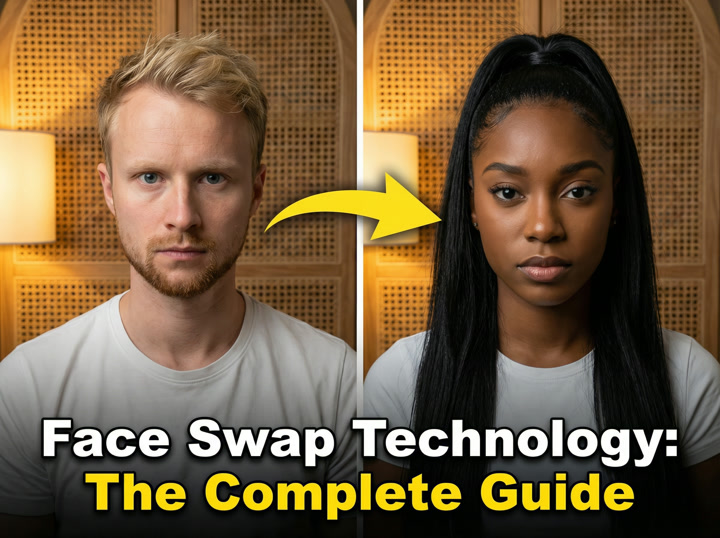
Face swap technology is an application of artificial intelligence that allows users to replace one person's face with another in photos or videos. At its core, face swap relies on sophisticated facial recognition algorithms that identify and map key facial landmarks—eyes, nose, mouth, jawline—creating a digital framework of each face's unique structure.
The technology has evolved dramatically from early manual photo editing techniques to today's advanced AI-powered solutions. Modern face swap applications utilize deep learning and neural networks to analyze facial features, allowing for seamless, realistic transformations that can maintain expressions, lighting conditions, and even accommodate different angles.
Face detection serves as the first critical step, where the AI locates faces within an image. Then, facial recognition maps key points to understand the structure before the machine learning algorithms blend the target face onto the destination image.
The Science Behind Modern AI Face Swapping
Modern AI face swapping relies heavily on specialized neural networks and deep learning algorithms. The technology often employs Generative Adversarial Networks (GANs), where two AI systems work against each other—one creates the face swap while the other evaluates its realism, continuously improving results through this competitive process.
Face detection algorithms first identify facial boundaries and landmarks across 68+ specific points. The system then creates a 3D model of both faces, mapping textures and features between them while preserving the original image's lighting, skin tone, and expressions. This intricate process happens in milliseconds with today's advanced artificial intelligence frameworks.
How AI Face Swap Works
AI face swap technology follows a sophisticated yet streamlined process. First, the algorithm detects faces in both source and target images using facial recognition. It then identifies dozens of precise facial landmarks to create a detailed facial map. Next, the system aligns these landmarks between faces, adjusting for differences in position, size, and angle. The deep learning algorithms then blend the swapped face with the original image, maintaining consistent lighting, color grading, and texture.
Advanced machine learning models continuously refine their ability to handle complex scenarios like partially obscured faces, unusual lighting conditions, or extreme expressions. The most sophisticated deepfake technology can maintain realistic eye movements, blinks, and facial expressions even in video sequences, creating results that can be nearly indistinguishable from unaltered footage.
Popular Face Swap Applications and Tools
The market offers a range of face swap applications catering to different needs and skill levels. Reface App stands as one of the most popular mobile applications, known for its user-friendly interface and high-quality results. The app excels at creating realistic face swaps for both photos and short video clips, making it accessible for casual users.
Canva has integrated face swap features into its broader design platform, allowing users to create marketing materials, social media content, and presentations with customized imagery. For more specialized face transformations, FaceWow offers advanced multi-face detection capabilities, handling group photos efficiently.
Online web tools like Vidnoz and Pixlr provide browser-based alternatives without requiring downloads. Live3D.io specializes in creating three-dimensional transformations, while BasedLabs.ai and MagicHour.ai cater to creators seeking more professional-grade results. Each platform offers distinct features, from basic swaps to sophisticated transformations with additional editing capabilities.
Free vs. Premium Face Swap Options: What's Worth Paying For
Free face swap tools typically limit resolution quality, restrict output formats, and include watermarks on final images. Many offer only basic editing features and limited face detection accuracy, especially with challenging angles or lighting conditions. Premium options like Reface App's subscription provide higher resolution outputs, watermark-free results, and enhanced AI processing for more realistic blending.
Paid services from platforms like Canva include additional creative features beyond simple face swapping, such as animation controls and integrated design tools. Professional face swap subscriptions also often include faster processing times and priority access to new features, making them valuable for content creators who require consistent quality and reliability.
How to Create High-Quality Face Swaps
Creating professional-quality face swaps begins with selecting appropriate source images. For best results, choose photos with similar lighting conditions, head positions, and facial expressions. Clear, front-facing images with good resolution provide the AI with optimal data for accurate facial mapping. Avoid images with obscured facial features, extreme angles, or heavy shadows that might confuse the face detection algorithms.
When using face swap technology, adjust the blending settings to match skin tones and lighting between the images. Most applications offer options to fine-tune the transition edges, color matching, and overall opacity. After the initial swap, examine details around the eyes, hairline, and jaw—these areas often require additional refinement for a truly convincing result.
The image quality of your output depends heavily on both source material selection and post-processing adjustments. Professional results often require several attempts with different source images and settings to achieve the most natural-looking face replacement.
Technical File Formats and Requirements
For optimal face swap results, start with high-resolution JPG or PNG files at minimum 1080p resolution. Most professional applications support images up to 4K, with some platforms accepting TIFF files for maximum quality. When working with videos, MP4 format at 30fps with H.264 encoding typically yields the best balance between quality and file size.
Face detection algorithms perform best with well-lit, clear images featuring minimal compression artifacts. For group photos requiring multiple swaps, maintain at least 300 pixels between faces to ensure proper detection and mapping during the photo editing process.
Multi-Face Swap Technology
Swapping multiple faces simultaneously presents unique challenges that specialized tools like FaceWow address effectively. When working with group photos, the face detection system must accurately identify and isolate each face individually while maintaining consistent lighting and perspective across all swaps.
The technology handles varying face angles by creating adaptive 3D models for each person, compensating for differences in positioning. Processing time increases with each additional face, as the facial recognition system needs to create separate mapping coordinates for each subject. For best results with multi-face swaps, ensure all subjects are similarly lit and facing the camera at comparable angles.
Troubleshooting Common Face Swap Issues
When face swaps appear unnatural, check for lighting inconsistencies between source and target images. Adjust brightness and contrast in your photo editing software before attempting the swap. If facial landmarks appear misaligned, select images with more similar head positions and expressions for better mapping.
Blurry or pixelated results typically stem from insufficient image resolution. Always start with the highest quality source materials available. For persistent edge artifacts around the swapped face, many applications offer feathering or blending tools to smooth transitions. When skin tones clash noticeably, use color grading adjustments to harmonize the overall image quality after completing the swap.
Creative Uses for Face Swap
Face swap technology enables remarkable creative opportunities beyond basic photo alterations. Marketing teams have embraced these tools to personalize advertising campaigns, allowing potential customers to visualize themselves using products or services. Mobile applications like Reface App have transformed entertainment content creation, enabling users to insert themselves into movie scenes, music videos, or alongside celebrities.
Content creators utilize face swap for storytelling purposes, creating visual narratives that would be impossible or prohibitively expensive to produce traditionally. Educational institutions have found value in historical recreations, bringing historical figures to life through carefully crafted face swaps on period-appropriate imagery.
The viral potential of creative face swap content has made it particularly valuable for social media campaigns, with brands seeing significantly higher engagement rates compared to traditional visual content. The technology has democratized a form of visual expression previously limited to professional studios with extensive resources.
Face Swap for Engaging Social Media Content
Face swap technology drives exceptional engagement on social platforms, with Reface App users creating viral content that generates up to 300% more shares than standard posts. For TikTok, short video face swaps with trending audio tracks show the highest performance, while Instagram audiences engage most with before/after transformation reveals.
Creative content creators find success with seasonal themes—holiday character transformations consistently generate high view counts. For corporate accounts, celebrity face swaps related to product launches create significant buzz, especially when the content maintains the platform's native aesthetic rather than appearing overtly promotional.
Gender Swap Applications
Gender swap features represent one of the most popular creative applications of face swap technology. Users explore alternate appearances through FaceWow and Pixlr's specialized gender transformation tools, which adjust facial structure, hair, and subtle features to create convincing cross-gender representations.
Beyond entertainment value, these tools serve practical purposes in creative content development, allowing writers and directors to visualize characters differently or actors to explore roles across gender lines. Photographers use gender swap capabilities to create thought-provoking artistic portraits that challenge viewer perceptions, while keeping the distinctive qualities that make each face unique.
Commercial Applications
Businesses increasingly leverage face swap technology to enhance customer experiences and marketing campaigns. Retail companies use Canva's face swap features to create personalized catalogs where potential customers can visualize themselves wearing products before purchase, resulting in 24% higher conversion rates according to industry studies.
In advertising, face swap technology creates personalized video messages at scale, with MagicHour.ai reporting that personalized face swap ads achieve 37% higher engagement than generic versions. Real estate firms use the technology to help buyers envision themselves in potential properties, while tourism companies create preview materials showing visitors in destination settings—both applications demonstrating measurable increases in customer commitment and purchase decisions.
The Ethical Dimension: Responsible Face Swap Usage
As face swap technology becomes more accessible and realistic, ethical considerations take center stage in its application. Responsible usage requires prioritizing consent as the fundamental principle—only using images of individuals who have explicitly agreed to have their likeness altered. This becomes especially important with deepfake technology that can create convincingly realistic video manipulations.
Privacy concerns extend beyond the immediate subject to others who might appear in modified content. Professional standards in the industry emphasize transparency about altered images, particularly in contexts where authenticity matters. Many platforms now integrate automated detection systems to identify potentially problematic face swap applications, especially those that might be used to spread misinformation.
Establishing clear boundaries between creative expression and potential harm remains an ongoing conversation among technology developers, content creators, and regulatory bodies. Ethical face swap creation involves considering the potential impact on all individuals represented and the broader societal implications of manipulated imagery.
Privacy, Consent, and Legal Considerations
Obtaining explicit consent stands as the primary legal and ethical requirement for face swap creation. Documented permission should specify exactly how the altered image will be used, distributed, and for what duration. Privacy concerns extend beyond consent to how the data is processed—many face swap applications store facial mapping data, raising questions about long-term data security.
Legal implications vary significantly by jurisdiction, with some regions explicitly prohibiting certain forms of digital manipulation without consent. Commercial use cases face stricter requirements than personal projects, with potential liability for misrepresentation, defamation, or copyright infringement when using protected images without proper licensing.
Ethical and Legal Framework
The ethical framework surrounding face swap technology continues evolving alongside technical capabilities. Industry professionals apply the principles of transparency (clearly identifying altered content), proportionality (ensuring the degree of manipulation is appropriate to the context), and accountability (taking responsibility for created content).
Current legislation addressing deepfake technology varies globally, with California's AB-602 requiring explicit consent for digitally created intimate content and Virginia's similar regulations carrying criminal penalties for violations. The European Union's GDPR adds another layer by categorizing facial data as sensitive personal information requiring special protection. These regulations form a patchwork of protections that professionals must navigate while working with face swap technology.
Advanced Techniques: Taking Face Swaps to the Next Level
Professional face swap creators employ sophisticated techniques to achieve photorealistic results that transcend basic face replacement. Advanced practitioners begin with comprehensive facial analysis, studying the unique characteristics of both source and destination faces to maintain individual expression patterns. They leverage artificial intelligence tools that preserve micro-expressions—the subtle muscle movements that make faces appear natural rather than static.
High-end face swap projects often involve frame-by-frame refinement in video applications, with manual adjustments to maintain consistency across lighting changes or extreme angles. Photo editing experts focus particular attention on eye alignment and reflection patterns, as human viewers instinctively notice inconsistencies in these areas first.
The most convincing face swaps incorporate environmental interaction—ensuring shadows fall correctly across the new face and that reflections in nearby surfaces correspond appropriately. This level of detail requires combining automated AI processes with targeted human refinement, leveraging the strengths of both approaches to create results that withstand close scrutiny even from trained observers.
Combining Face Swap with Other AI Tools
Professional content creators achieve remarkable results by integrating face swap technology within broader AI workflows. Starting with AI-enhanced image resolution tools improves source material quality before the face swap process begins. After completing the initial swap, AI-powered photo editing tools can adjust lighting consistency, skin texture, and color grading to further enhance realism. For AI-powered video creation, check out our video generator.
For video applications, combining face swap technology with AI motion tracking ensures the replaced face maintains proper positioning throughout complex movements. Voice synthesis AI can match new audio to the swapped face, creating completely transformed characters with synchronized speech and facial expressions from entirely different source materials.
AI Hairstyles and Photo Transformations
Complete visual transformations combine face swap technology with AI hairstyle generators for comprehensive makeovers. Reface App offers integrated hairstyle features that analyze facial structure to recommend and apply natural-looking hairstyle changes that complement the swapped face. These tools map the skull structure beneath the visible features to ensure hairstyles sit naturally on the head.
The most effective transformations layer multiple AI modifications in sequence: first adjusting facial structure, then applying the face swap, followed by hairstyle modification, and finishing with skin tone harmonization. This layered approach creates cohesive results where each element supports the others, avoiding the disconnected appearance that often results from single-technology approaches.
The Future of Face Swap Technology: What's Coming Next
Face swap technology stands at the beginning of a significant evolutionary leap. Advances in neural networks are enabling real-time face swapping with unprecedented realism, eliminating the processing delays that currently limit live applications. Artificial intelligence researchers are developing systems that maintain consistent identity across varied lighting conditions, angles, and expressions—a current limitation of many existing tools.
The next generation of deepfake technology will likely incorporate physiological accuracy, ensuring that swapped faces maintain natural muscle movement patterns including micro-expressions that current systems often miss. We're also seeing early development of cross-medium face swapping that can transpose faces between different content types—from still images to animation or CGI environments with appropriate style adaptation.
These technological advances will make face swapping more accessible while simultaneously raising the bar for detection systems designed to identify manipulated content.
Preparing for the Next Generation of Face Swapping
As face swap technology advances, content creators should develop skills in complementary areas to maximize its potential. Understanding the principles of lighting design helps create more convincing integrations, while knowledge of facial anatomy improves the ability to troubleshoot problematic results. Technical familiarity with video compression artifacts helps predict how face swaps will appear across different platforms.
Forward-thinking professionals are exploring procedural workflows that combine multiple AI tools, creating templates that can be applied consistently across projects. The ability to evaluate and integrate emerging face swap applications into existing production pipelines will become increasingly valuable as the technology landscape continues its rapid evolution.
Conclusion: Mastering the Art and Science of Face Swapping
Face swap technology represents a powerful intersection of artificial intelligence and creative potential. Whether used for entertainment, marketing, or artistic expression, the most successful applications balance technical excellence with creative vision. The tools continue evolving rapidly, expanding possibilities while simultaneously raising important questions about representation and authenticity.
As with many transformative technologies, the most valuable approach combines technical mastery with ethical awareness. The creative content possibilities expand daily, but remain most impactful when guided by clear purpose and respect for both subjects and audiences. Face swap technology, when thoughtfully applied, offers remarkable opportunities to visualize alternatives, tell stories, and engage audiences in ways previously impossible. Ready to try it yourself? Use our AI face swap tool to create your first face swap in seconds.