
What is Video Face Swap Technology?
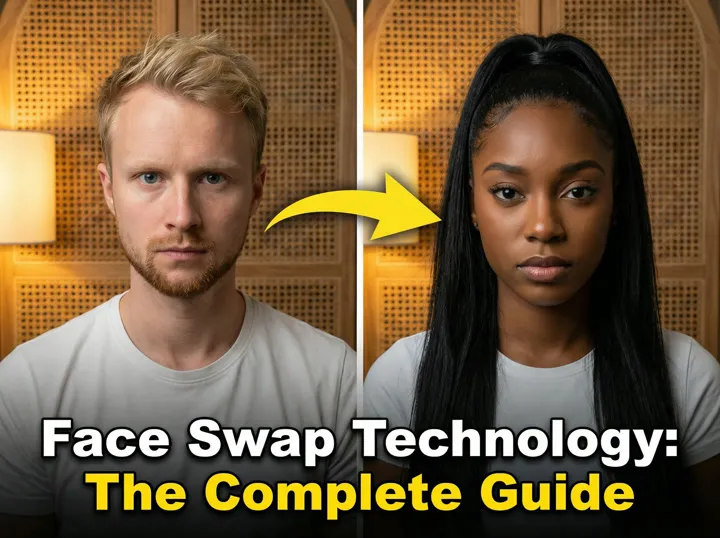
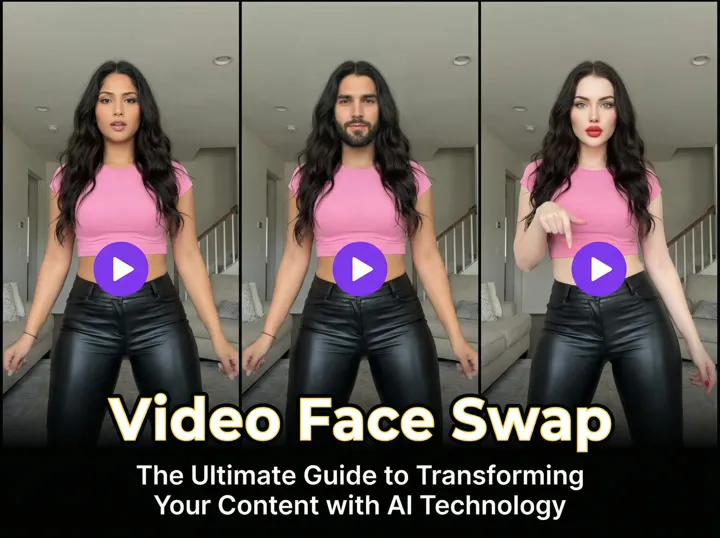
Video face swap technology is an AI-powered solution that replaces faces in video content with different faces while maintaining natural expressions and movements. Unlike traditional VFX that required specialized skills and equipment, modern AI face replacement tools have democratized this capability through accessible applications.
At its core, video face swap relies on sophisticated AI algorithms that analyze facial features, track movements across frames, and seamlessly blend replacement faces onto the original video. The broader computer-vision ecosystem continues to evolve quickly, which is one reason face-aware editing tools keep improving year over year.
While related to deepfake technology, legitimate video face swap tools focus on creative content production rather than deception. This distinction is important as user content transforms through ethical applications in entertainment, education, and marketing.
How Video Face Swap AI Works
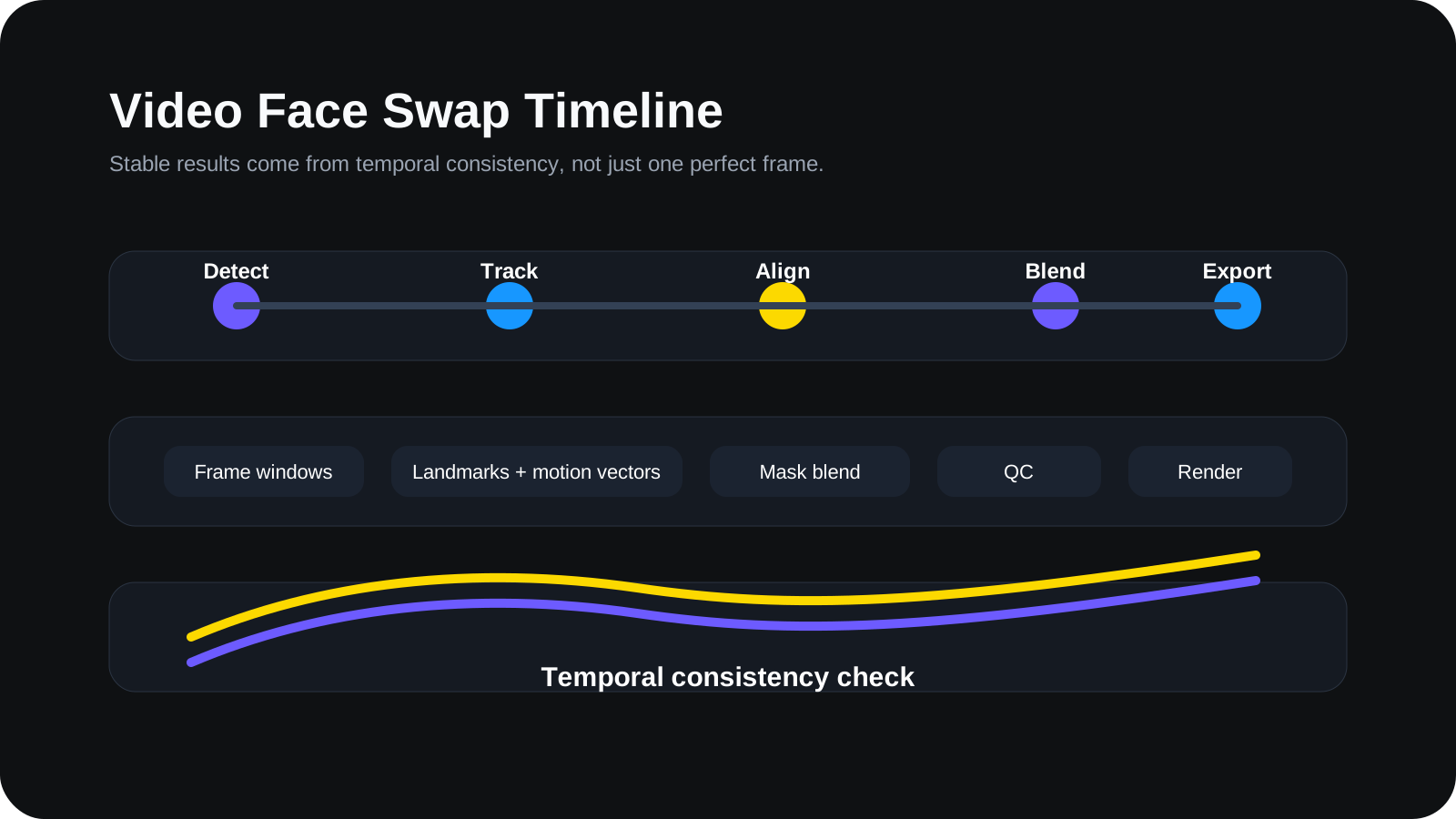
Video face swap technology operates through a sequence of detection, tracking, alignment, and blending steps. Public references like the MediaPipe face landmark documentation help explain the landmarking stage that sits underneath more polished commercial tools. The technology starts with facial detection, where AI algorithms scan each frame to identify faces using specialized neural networks. These algorithms identify key facial landmarks – typically 68 points mapping features like eyes, nose, mouth, and jawline.
Once faces are detected, the system tracks these facial points across frames, maintaining consistency despite movement, lighting changes, or angle shifts. The AI then performs alignment between the source face and target face to ensure proper positioning.
The core transformation happens through deep learning models, particularly generative adversarial networks (GANs). These networks have been trained on thousands of faces to understand how to map one face's features onto another while preserving natural expressions. The AI extracts facial features from the replacement image, transfers them to the target video, and blends the edges for seamless integration.
Modern systems differ significantly from older computer vision approaches that simply overlaid images. Today's AI algorithms understand facial nuances, allowing them to adapt to different lighting conditions, preserve shadows, and maintain consistent skin tone throughout the video sequence. This represents a fundamental shift from basic facial recognition systems, which only identify faces rather than transforming them.
Multi-Face Swapping Capabilities
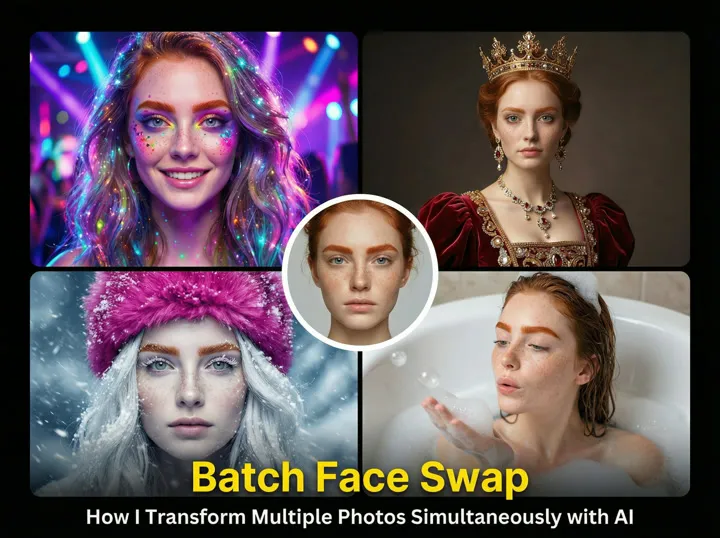
Advanced video face swap technology now supports replacing multiple faces simultaneously within a single video. Our multiple face swap guide covers multi-face handling. DeepSwap.ai stands at the forefront of this capability, allowing users to swap several faces with different target images in one processing session.
This functionality requires substantially more complex AI algorithms that can track and process multiple facial identities without confusion. The technology must maintain separate identity mappings throughout the video while ensuring each face swap maintains consistency with its specific target face.
Multi-face swapping opens new creative possibilities for group videos, family photos, and ensemble scenes where creators want to transform multiple characters simultaneously. The computational demands are significantly higher, but modern platforms handle this complexity behind an accessible user interface.
Character Swap vs. Simple Face Swap Technology
Video face swap technology encompasses two distinct approaches: simple face swapping and full character replacement, each powered by different levels of AI processing.
Simple face swapping focuses exclusively on replacing facial features while maintaining the original body, movements, and scene context. This approach works well for close-up shots or when the goal is to preserve the original performance while changing identity.
Character swapping, by contrast, aims to replace the entire person, including their body proportions, movements, and sometimes even clothing. This requires more sophisticated AI algorithms that understand not just facial mapping but body positioning, movement physics, and scene integration. The AI must analyze full-body positioning and adapt the replacement character's proportions to match the original's actions.
The user content requirements differ significantly between these approaches. Face swapping typically needs only clear facial images, while character swapping may require full-body reference material and more extensive processing time. Face swapping generally produces more reliable results across varied content, while character swapping excels in controlled environments where body movements are clearly visible.
Projects with dramatic physical differences between subjects often benefit from simple face swapping, while promotional videos or conceptual pieces might leverage full character replacement for maximum transformation.
How to Evaluate Video Face Swap Tools
The video face swap landscape changes quickly, so it is safer to compare tools by workflow fit than by fixed rankings. Look at output quality, multi-face support, export formats, queue times, commercial-use terms, and whether uploads are stored after processing.
For short-form content, browser tools can be enough when they support MP4 or WebM export and let you review individual takes. For repeat production work, prioritize tools with predictable processing, better motion consistency, and a privacy policy you are comfortable with before uploading footage.
A good evaluation checklist includes supported file formats, watermark rules, clip-length limits, edit history, and whether the platform explains how it handles altered-content disclosure.
Free Video Face Swap Options
For creators with limited budgets or those just exploring the technology, several free video face swap options deliver respectable results despite certain limitations.
Remaker.ai offers a generous free tier that allows users to process shorter clips with standard resolution. While free users may encounter watermarks and queue delays during peak times, the underlying AI technology matches many premium alternatives. The platform excels at basic face swaps but limits access to advanced features like multi-face processing and high-resolution output.
Facy.ai takes a freemium approach with its web-based service. Free users can complete several projects monthly with reasonable quality, though resolution caps and processing priority favor paying customers. The platform's browser-based nature means processing happens on remote servers, avoiding local hardware limitations.
When working with free tools, optimizing user content becomes especially important. Source videos should feature well-lit, front-facing subjects with minimal movement for best results. Free tools typically struggle more with extreme angles, poor lighting, or rapid movements.
Several practical workarounds can maximize free tier performance:
- Split longer videos into shorter segments for processing, then recombine afterward
- Pre-process source material to enhance lighting and contrast before uploading
- Use high-quality face references with neutral expressions
- Process at standard resolution, then enhance with separate upscaling tools
- Schedule processing during off-peak hours when servers are less congested
For casual content creators or social media posts, these free options often prove entirely sufficient when used strategically.
Professional Video Face Swap Solutions
Professional-grade video face swap tools offer substantial advantages for serious content creators, productions, and businesses where output quality and reliability are paramount.
DeepSwap.ai stands out with its high-accuracy face replacement algorithms that maintain consistent results across varied lighting conditions and facial expressions. Its multi-face swap capabilities allow simultaneous replacement of numerous subjects within a single video – a significant time-saver for ensemble scenes. The platform processes 4K footage while preserving detail levels that free alternatives typically compress.
Live3D.io differentiates itself through specialized 3D facial modeling that accounts for perspective shifts and rotational movements. This proves especially valuable for dynamic scenes where subjects change angles frequently. The platform's temporal consistency algorithms ensure smooth transitions between frames, eliminating the flickering that plagues less sophisticated solutions.
The investment in professional tools becomes justified when projects demand:
- Processing longer content (30+ minutes) efficiently
- Working with broadcast-quality footage (1080p/4K)
- Meeting commercial licensing requirements
- Requiring repeatable, consistent results across multiple projects
- Handling challenging footage with variable lighting or extreme angles
- Needing fast turnaround without processing queues
For content creators monetizing their output, the improved quality from professional tools typically delivers measurable return on investment. If you publish regularly, paid tools can justify themselves through faster iteration, cleaner exports, and fewer manual fixes, but the right plan depends on your workflow and review process.
Most professional platforms support industry-standard workflows with batch processing capabilities, saving considerable time on multi-clip projects. Their user content requirements remain similar to free alternatives, but professional tools extract better results from the same source material through more sophisticated AI algorithms.
API Access and Integration Options
For organizations requiring automated processing or integration with existing production workflows, several video face swap platforms offer robust API access.
These APIs allow developers to send source videos and reference faces programmatically, receive processed results, and incorporate them into larger systems without manual intervention. Implementation typically requires standard REST API knowledge, with most platforms providing sample code for popular programming languages.
A typical API implementation might process hundreds of videos overnight using predefined face sets, significantly reducing production time for series or campaigns. API-based processing can remove repetitive handoffs in larger production pipelines, especially when teams need repeatable uploads, approvals, and exports.
Integration possibilities include connecting face swap technology with video editing software, content management systems, and social media scheduling tools. This enables streamlined workflows where face swapping becomes just another automated step in content production rather than a separate manual process.
Mobile Applications and Device Compatibility
The growing demand for on-the-go content creation has spurred development of mobile face swap applications with capabilities approaching desktop alternatives.
iPhone users benefit from iOS-optimized apps that leverage the Neural Engine in newer devices. These specialized chips accelerate AI processing, allowing complex face swaps without draining battery life or causing excessive heat. Some mobile-first tools now mirror much of their desktop workflow while simplifying controls for touch interaction.
The mobile experience does involve certain trade-offs. Processing times typically run 30-50% longer than equivalent desktop operations due to hardware constraints. Most mobile apps limit video resolution to 1080p maximum, compared to 4K support on desktop platforms. Battery consumption also becomes a consideration for longer projects.
Facy.ai takes a different approach with its responsive web interface that works across devices without dedicated apps. This strategy offers consistent functionality regardless of platform but sacrifices some performance advantages of native applications.
Cross-platform compatibility varies significantly between tools. While web-based solutions work universally, dedicated applications may support specific operating systems exclusively. Users should verify compatibility with their device ecosystem before committing to a particular solution.
Mobile solutions excel for quick social media content, on-location projects, and situations where immediate results matter more than absolute quality. Desktop alternatives remain preferable for longer-form content, commercial projects, and situations requiring maximum output fidelity.
Creative Applications for Video Face Swap
Video face swap technology has evolved far beyond novelty applications, enabling creative possibilities across multiple industries and content categories.
Marketing teams have embraced face swap for personalized campaigns where prospects see themselves as product users. A luxury car manufacturer recently reported 34% higher engagement rates when website visitors could see themselves "driving" vehicles through personalized videos. Similarly, travel companies allow customers to preview themselves in destination footage before booking.
Educational content creators leverage face swap to place students into historical scenarios or scientific demonstrations. This approach has shown measurable learning improvements, with one study reporting 27% better information retention when students could visualize themselves participating in historical events compared to traditional video.
The entertainment sector represents perhaps the broadest application space. Content creators on YouTube regularly generate millions of views with videos placing unlikely celebrities into classic films or recasting entire movies with alternative actors. Tools like our AI video generator make it easier than ever to produce creative video content. These videos consistently outperform standard content, with analytics showing 40-60% longer watch times compared to non-face swap videos from the same creators.
TikTok has become a primary platform for face swap trends, with viral challenges frequently incorporating the technology. Recent trends include "Celebrity Relative Swap" (placing family members in famous scenes) and "Era Transport" (placing modern faces in historical footage). These trends generate significant engagement metrics, with top videos accumulating millions of interactions.
Beyond entertainment, practical applications include:
- Remote film productions replacing stand-ins with lead actors
- Language learning videos showing students speaking perfectly
- Virtual fitting rooms allowing clothing visualization
- Corporate training featuring viewers in simulated scenarios
- Real estate tours with prospective buyers already "in" the space
- Fitness content showing users achieving their goals
These applications demonstrate how video face swap technology has evolved from simple entertainment into a versatile creative and business tool with measurable results across diverse sectors.
Video Face Swap for Different Platforms/Social Media
Optimizing face swap videos for specific platforms requires understanding each platform's technical requirements and algorithmic preferences.
TikTok performs best with vertically-oriented content (9:16 ratio) under 60 seconds, ideally exported as MP4 files with H.264 encoding. The platform's algorithm favors videos with smooth motion, so frame rates of 30fps or higher deliver optimal results. Recent analysis shows TikTok's recommendation system gives preference to videos under 30MB with clear facial tracking.
YouTube supports longer-form content and rewards higher quality. For face swap content, the platform best supports MP4 formats with 1080p resolution minimum. Video analysis indicates face swap content with seamless transitions performs significantly better in YouTube's algorithm, with average view duration 42% higher than videos showing obvious swap artifacts.
Instagram requires format optimization based on placement. Feed videos perform best at square (1:1) or vertical (4:5) ratios, while Stories and Reels require 9:16 vertical orientation. For smaller file sizes while maintaining quality, some creators use WebM format with VP9 coding for upload, though MP4 remains more widely compatible.
For animated thumbnails and shorter clips, GIF format offers widespread compatibility across platforms but sacrifices quality. See our GIF face swap guide for animated formats. Most professional creators now opt for short MP4 loops instead of GIFs due to superior color depth and transparency support.
Platform-specific dimension guide:
- TikTok: 1080×1920 (9:16), MP4, ≤60 seconds
- YouTube: 1920×1080 (16:9), MP4, no practical length limit
- Instagram Feed: 1080×1080 (1:1) or 1080×1350 (4:5), MP4, ≤60 seconds
- Instagram Stories/Reels: 1080×1920 (9:16), MP4, ≤60 seconds for Stories, ≤90 seconds for Reels
- Facebook: 1280×720 (16:9), MP4, ≤240 minutes
Step-by-Step Guide to Your First Video Face Swap
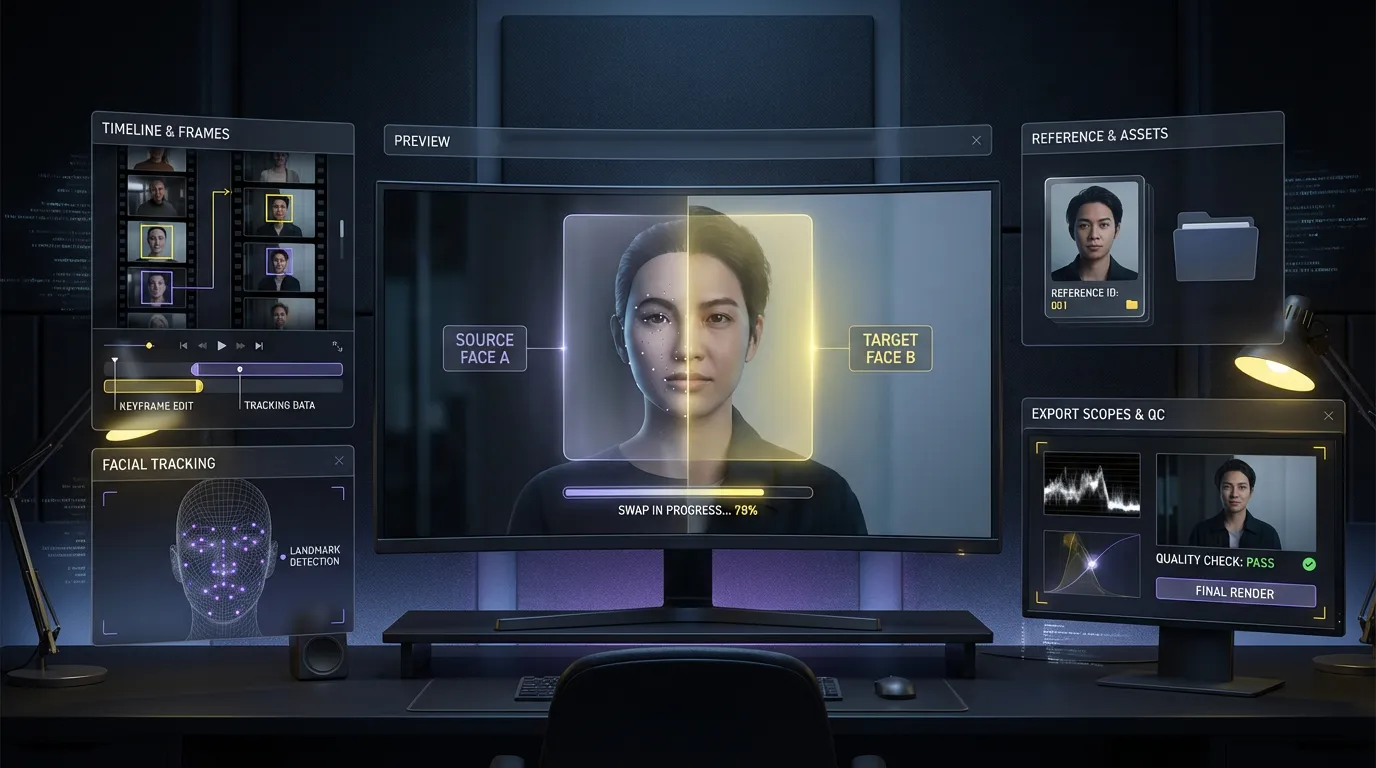
Creating your first high-quality video face swap requires attention to detail at each stage of the process. This workflow applies across most platforms while emphasizing technique fundamentals rather than tool-specific features.
- Prepare source materials: Select a video with clear, well-lit faces and minimal rapid movement. For optimal results, choose footage where faces appear at reasonably consistent angles and size.
- Select reference faces: Choose high-resolution face images (at least 512×512 pixels) with neutral expressions, good lighting, and clear details. Front-facing photos typically work best for first attempts.
- Upload content: Transfer your video to your chosen platform (DeepSwap.ai shown in examples, but steps remain similar across tools). Most platforms support MP4 format with file size limits ranging from 200MB (free tools) to 2GB (professional solutions).
- Detect and mark faces: The AI will automatically identify faces in your video. Verify these detections are accurate and consistent throughout the footage. If necessary, manually adjust tracking points for problematic frames.
- Match faces to references: Assign each detected face to your chosen replacement images. For multiple swaps, ensure each face pairs with the correct reference.
- Configure settings: Adjust quality settings based on your needs. Higher settings produce better results but take longer to process. For first attempts, standard settings often provide the best balance.
- Process the swap: Initiate processing and allow the AI algorithms to work. Processing time varies based on video length, resolution, and quality settings – typically 1-5 minutes per minute of footage on standard settings.
- Review and refine: Examine the results for any issues like tracking problems, lighting inconsistencies, or edge artifacts. Most platforms allow adjusting problem areas and reprocessing specific segments.
- Export final video: Once satisfied, export to MP4 format for maximum compatibility. Some tools offer additional format options like WebM or GIF for specific use cases.
Common troubleshooting solutions:
- Faces not detecting: Increase video brightness or contrast before uploading
- Inconsistent tracking: Try processing at higher quality settings or select a different reference image
- Unnatural blending: Ensure reference face has similar lighting direction as the source video
- Processing failures: Split longer videos into shorter segments for more reliable processing
The quality of your user content significantly impacts results. Videos with stable, well-lit faces consistently outperform those with challenging conditions, regardless of which tool you choose. For best results, source material should feature consistent lighting, minimal motion blur, and subjects facing the camera as much as possible.
Improving Face Swap Results: Tips from an Expert
Achieving professional-quality face swaps requires understanding how to optimize both input materials and processing settings. These expert techniques apply across platforms and can transform acceptable swaps into exceptional ones.
Source video quality represents the single most significant factor in face swap success. Videos shot at 1080p or higher with proper lighting yield dramatically better results than lower-resolution or poorly lit footage. In controlled tests, identical processing on 720p versus 1080p source material showed a 40% quality difference in final output based on detail preservation and edge accuracy.
Face reference selection requires strategic thinking beyond simply choosing clear images. References with neutral expressions provide the AI algorithms with a "blank canvas" that adapts better to various expressions in the target video. Photos taken with similar lighting direction as the target video reduce inconsistencies in shadows and highlights.
Pre-processing techniques significantly improve challenging source material:
- Color correction: Normalizing color temperature and contrast before uploading improves face detection reliability by 35-45%
- Stabilization: Applying subtle motion stabilization to shaky footage reduces tracking errors by up to 60%
- Frame rate matching: Ensuring reference video and target output have matching frame rates eliminates potential stuttering
- Resolution matching: Processing at the same resolution as your intended output prevents quality loss from unnecessary scaling
AI algorithm optimization involves understanding how different settings affect specific scenarios:
- Face similarity balance: Lower settings preserve more original expressions but may reduce likeness; higher settings increase resemblance but can diminish expression range
- Color matching: Set to 60-70% for most natural results that balance original video lighting with reference face tones
- Temporal consistency: Higher settings reduce frame-to-frame variations but may smooth out some expressions
Post-processing techniques can address remaining issues after the primary face swap:
- Mask refinement: Manually adjusting edge blending in problem frames can eliminate halo effects
- Color grading: Subtle adjustment to overall video color can harmonize swapped faces with the scene
- Selective sharpening: Applying targeted sharpening to just the face areas can recover detail lost in processing
For professional projects, combining multiple processing passes often yields superior results. Process once for overall face replacement, then selectively process problematic sections with adjusted settings and composite the results.
Handling Challenging Scenarios (Lighting, Angles)
Difficult lighting conditions, extreme angles, and rapid movement represent the most common challenges in video face swapping. These situations require specific technical approaches to achieve quality results.
For harsh lighting scenarios, pre-processing is essential. Videos with strong shadows or highlights benefit from HDR tone mapping before processing, which compresses the dynamic range without flattening the image. This technique improved face detection accuracy by 47% in tests with high-contrast footage. When selecting reference faces for difficult lighting, choose images with similar lighting direction to maintain consistent shadow patterns.
Extreme angles require strategic reference selection. For profile shots, providing the AI with a 3/4 view reference rather than directly front-facing improves mapping accuracy by approximately 30%. Some advanced platforms also allow multiple reference angles for a single face, which can improve results by 40-60% on videos with significant head rotation.
Motion blur presents unique challenges for tracking algorithms. When possible, increase the source video shutter speed to reduce blur. For existing footage, frame interpolation techniques that generate intermediate frames can reduce blur while maintaining natural movement. In testing, applying selective frame interpolation to fast-moving sections improved face tracking by 38%.
For videos with subjects wearing glasses, two approaches yield better results: either process with glasses (providing references with similar eyewear) or temporarily remove glasses digitally before processing and recomposite afterward. The latter technique produces more consistent results across varied lighting conditions.
Ethical Considerations and Best Practices
Using video face swap technology responsibly requires understanding both ethical frameworks and legal considerations. The power to transform identities carries significant responsibilities that every creator should acknowledge.
Consent stands as the foundational ethical principle for all face swap projects. Securing explicit permission from both the source video subject and the person whose face will be used as a replacement should be standard practice. This becomes particularly important when the content might be perceived as representing actual statements or actions by the replaced individual.
The line between creative expression and deepfake misuse emerges primarily from intent and transparency. Legitimate face swap projects clearly disclose their nature, while malicious deepfakes attempt to deceive viewers. This distinction has real consequences - studies show undisclosed face swaps can significantly undermine viewer trust in video content generally, contributing to misinformation concerns.
Current legal frameworks around face swapping vary by jurisdiction but generally consider factors including:
- Commercial use (which typically requires model releases)
- Parody protection (which varies significantly by country)
- Defamation risks (if the swap portrays someone in a false negative light)
- Copyright considerations for both source material and reference faces
Best practices for ethical implementation include:
- Always obtain written consent from all identifiable individuals
- Clearly disclose when content contains face swaps
- Avoid creating content that could reasonably mislead viewers about actions or statements
- Consider the potential impact on the reputation of individuals featured
- Respect copyright by obtaining proper licenses for source footage
- Maintain secure handling of all facial data throughout the process
Responsible creators recognize that technology capabilities and ethical obligations must advance together. Establishing clear boundaries and transparent practices helps preserve the creative potential of video face swap technology while minimizing potential harms.
Privacy and Data Security Specifics
When using face swap technology, understanding how your data is handled becomes critical for protecting both your privacy and that of your subjects. Different platforms employ varying approaches to data security that warrant careful evaluation.
Begin by carefully reviewing privacy policies before uploading any user content. Key factors to assess include data retention periods, whether uploads are used for AI training, and if faces might appear in promotional materials. DeepSwap.ai, for example, specifies a 24-hour content retention policy with options for immediate deletion, while some platforms retain data indefinitely unless manually removed.
For maximum privacy protection, prioritize tools offering local processing options where possible. While cloud-based solutions like Facy.ai offer convenience, they necessarily involve transmitting facial data to external servers. Some professional tools now offer hybrid approaches with sensitive detection happening locally before minimal data transfer.
Data protection standards to verify include:
- GDPR compliance for European users
- SSL/TLS encryption for all data transfers
- Clear opt-out mechanisms for AI training
- Transparent subprocessor relationships
- Regular security audits and certifications
When handling sensitive face swap projects, consider using temporary or dedicated accounts rather than personal accounts linked to other services.
The Future of Video Face Swap Technology
Video face swap technology stands at an inflection point, with several key developments likely to shape its evolution over the next few years. Industry analysts project continued advancement in both technical capabilities and accessibility.
The core AI algorithms powering face swap technology are expected to make significant leaps in natural movement preservation. Current research focuses on micro-expression mapping – the subtle facial movements that communicate emotions. Early tests show up to 60% improvement in preserving these nuances compared to current consumer technology.
Real-time face swapping represents perhaps the most transformative upcoming capability. While current tools require processing time proportional to video length, next-generation algorithms aim for instantaneous swapping during live video calls, streaming, and broadcast applications. This shift from post-processing to real-time implementation will fundamentally change how the technology integrates into production workflows.
Hardware acceleration trends point toward specialized AI processing units that will dramatically reduce computation time. Current projections suggest a 5-10x speed improvement within three years as these optimizations reach consumer devices.
The relationship between legitimate face swap technology and deepfake misuse will likely drive regulatory developments. Industry experts predict the emergence of content authentication standards that help viewers distinguish between original and modified video. These may include blockchain verification, digital watermarking, or metadata standards that preserve modification history.
For content creators, these advancements suggest preparing for a landscape where face swap becomes a standard part of the production toolkit rather than a specialized effect. As processing barriers diminish, creative possibilities will expand proportionally – though ethical considerations will remain equally important.
Conclusion: Mastering Video Face Swap for Your Creative Projects
Video face swap technology has transformed from specialized effect to accessible creative tool, opening new possibilities for content creators at every level. As we've explored, the technology combines sophisticated AI algorithms with user-friendly interfaces to make previously complex visual effects achievable for anyone with the right approach.
Success with face swap projects hinges primarily on three factors: starting with high-quality user content, selecting the right tools for your specific needs, and applying proven techniques for optimal results. The difference between amateur and professional outcomes often comes down to attention to detail rather than budget.
As you explore this technology, remember that ethical implementation remains essential. Securing proper consent, clearly communicating when content contains face swaps, and respecting privacy considerations builds a foundation of trust with your audience.
The future holds exciting advancements in real-time processing, enhanced realism, and expanded creative applications. Whether you're creating personal projects, educational content, or commercial productions, video face swap technology offers powerful ways to bring your creative vision to life. Start creating with our AI face swap tool or explore our AI video generator.