Verification: 234cbc2215f1fb96
Pricing
0
4 / 4
9:16

Super Promotion

90% OFF

Create stunning AI photos & videos with essential tools

Unlock the Basic Plan for just $1

Auto-renewal is active. Cancel anytime. 90% off applies to the first billing cycle.

By choosing your age and continuing you agree to our Terms of Use and Privacy Policy
Please review before continuing

Imagen 4 Fast AI Image Generator

Imagen 4 Fast is the page to open when speed matters more than squeezing the absolute maximum detail out of one hero image. The official Google Cloud documentation positions it as the fast Imagen 4 text-to-image model on Vertex AI, with support for image generation, digital watermarking and verification, user-configurable safety settings, prompt enhancement, person generation, and provisioned throughput.

That description is useful because it explains the model's real job. Imagen 4 Fast is not the premium finishing route for the biggest, most polished stills. That is closer to Imagen 4 Ultra. Fast is the route for concept rounds, paid-social option sets, thumbnail directions, quick campaign mood tests, and any workflow where getting several decent options now is more valuable than waiting longer for a larger premium output.

Quick Answer

Use Imagen 4 Fast first when the work is iteration-heavy: fast concept exploration, ad variation rounds, social crops, and any batch where speed, repeatability, and standard delivery sizes matter more than large-format premium output.

The core official sources for this page are the Imagen 4 Fast model page, the Imagen text-prompt generation guide, and the output resolution guide.

What Imagen 4 Fast is best at

Imagen 4 Fast makes the most sense when the team needs quick visual options, not a slow search for one perfect frame. The official model page lists support for up to four output images per prompt, standard production-friendly aspect ratios, and a higher regional online prediction request quota than the regular and Ultra tiers. Those details sound technical, but together they describe a very practical use case: fast review loops.

In real work that usually means first-pass ad directions, early brand moodboards, high-volume social testing, quick product-scene concepts, and image batches where the main question is “which direction should we keep pushing?” rather than “is this already the final master asset?”

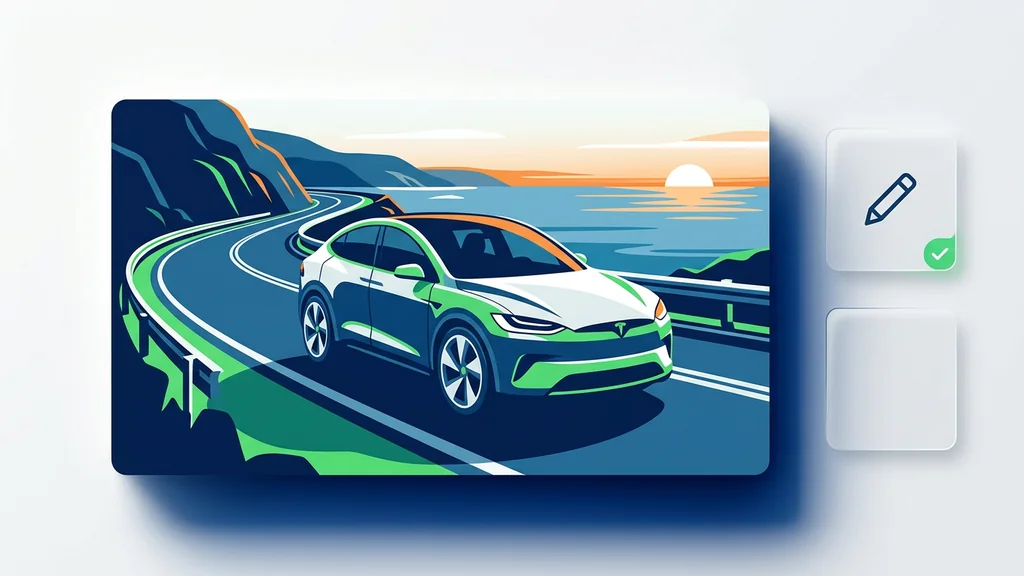
Abstract editorial board showing multiple fast concept directions for one campaign brief, illustrating quick image iteration and option review
Think of Imagen 4 Fast as a model for decision velocity. It is strongest when one brief needs several credible visual directions quickly, so a team can review, reject, and refine without waiting for a premium final-frame workflow.

Fast direction-finding

Useful when you need quick rounds of campaign concepts, not one slow high-resolution masterpiece.

Batch-friendly output

The official technical specs allow up to four output images per prompt, which matches review-heavy creative work well.

Standard placement sizes

The supported resolutions cover common square, portrait, and landscape placements, which is enough for many social and campaign tests.

Not the finishing tier

If the real reason you are here is large premium output resolution, the official docs point you toward comparing Ultra instead.

Why Imagen 4 Fast feels different from Ultra

The easiest way to place Fast correctly is to compare the official support tables instead of guessing from the name. Fast supports the common aspect ratios and base resolutions most teams need for concepting, while Ultra adds the larger output sizes for premium still-image work. Fast also has a much higher regional online prediction request quota on the official model page.

That changes the workflow. Fast is easier to justify when the task is “show me several viable routes quickly.” Ultra is easier to justify when the task is “give me one higher-end still that needs to look closer to final from the start.”

Area Imagen 4 Fast Imagen 4 Ultra Practical takeaway
Supported resolutions 1024x1024, 896x1280, 1280x896, 768x1408, 1408x768 Fast resolutions plus 2048x2048, 1792x2560, 2560x1792, 1536x2816, 2816x1536 Fast is better for standard-sized iteration. Ultra is better when higher-resolution delivery is part of the reason you chose the model.
Maximum images per prompt 4 4 Both can return multiple options, but Fast is the easier default when you expect many rounds of review.
Regional online prediction request quota 150 per minute per base model 30 per minute per base model Fast is the friendlier starting point for higher-volume testing or heavier operational use.
Main user question How quickly can I review strong options? How polished can I make one still image? Pick Fast for iteration speed; pick Ultra for premium still-image quality and larger export sizes.

What the official docs actually confirm

The cleanest way to keep this page useful is to separate verified facts from hype. The official Google docs confirm enough to build a strong page without inventing benchmark claims, pricing comparisons, or unsupported platform promises.

Area Officially supported What that means for the user
Inputs and outputs Text input, image output This is a text-to-image generation route, not an edit-first image workflow.
Core capabilities Image generation, digital watermarking and verification, user-configurable safety settings, prompt enhancement, person generation, provisioned throughput Fast is built for generation with operational support, not for style transfer or image surgery.
Not supported Few-shot image customization, subject customization, style customization, controlled customization, instruct customization or style transfer, mask-based image editing, mask-free image editing, insert or remove objects, outpainting, product image editing, upscaling, negative prompting If you need edits, recontext work, or detailed manipulation of an existing image, compare another route first.
Aspect ratios 1:1, 3:4, 4:3, 9:16, 16:9 Enough for common social, portrait, square, and wide campaign placements.
Technical limits Maximum image size 10MB, up to 4 output images per prompt, MIME types image/png and image/jpeg Good fit for fast batch generation and review loops with clean standard image outputs.
Prompt languages English plus preview support for simplified Chinese, traditional Chinese, Hindi, Japanese, Korean, Portuguese, and Spanish The model is still easiest to think of as English-first, with several additional prompt-language options in preview.
Output resolution controls The separate output resolution guide only lists configurable output resolution support for imagen-4.0-generate-001 and imagen-4.0-ultra-generate-001 Fast should be treated as a fixed-size standard-resolution generator, not the route for larger-resolution tuning.

How to prompt Imagen 4 Fast without slowing yourself down

Fast models reward clear briefs. The goal is not to write the longest prompt; it is to write the cleanest one for quick review. In practice that means naming the subject, the setting, the crop, the light, and the intended use case. If the prompt is vague, you usually waste the speed advantage because the first batch still needs a rewrite.

There is one especially useful note in the official text-prompt guide: imagen-4.0-fast-generate-001 may produce undesirable results when the prompt is complex and enhanced prompts are used. Google's own suggestion is to avoid “Help me write” in the console or set enhancePrompt to false when the brief is already complex. That makes Imagen 4 Fast a better fit for focused prompts than for overloaded ones.

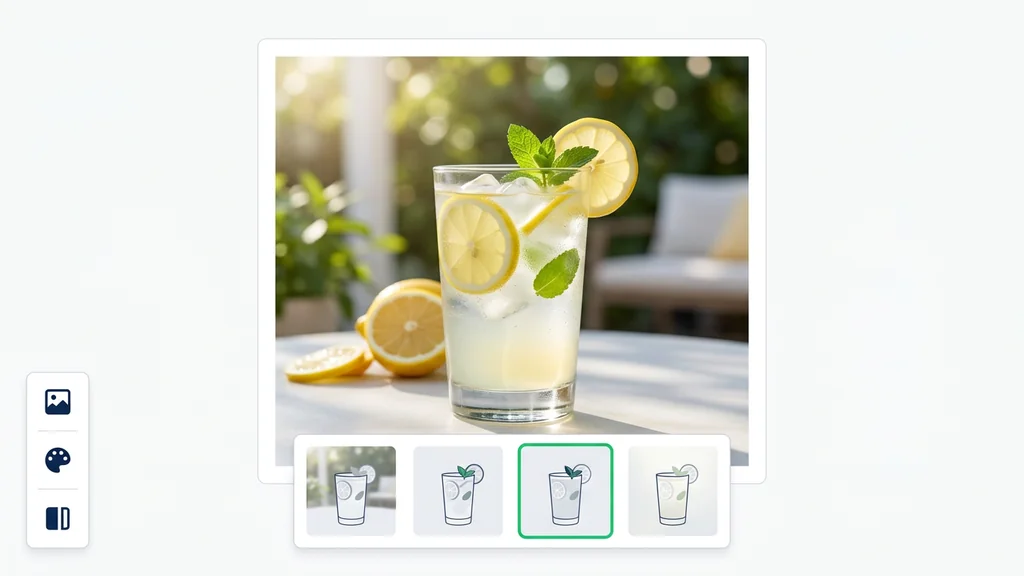
Workflow illustration showing a concise brief, a quick set of generated options, and one selected direction for refinement
The most effective Fast workflow is simple: write one tight brief, generate a small set of options, pick a direction, then rewrite with intent. Speed is most valuable when the prompt is already clear enough to produce usable branches.
Prompt Example 1

Goal: four paid-social concept directions for a skincare launch.

Prompt: Create a clean skincare campaign image with one frosted bottle on pale stone, soft warm light, modern beauty-ad composition, negative space for headline copy, realistic material finish, square social crop.

Prompt Example 2

Goal: quick landing-page hero concept.

Prompt: Generate a startup landing-page hero visual showing a compact AI workspace, dark laptop, subtle interface glow, calm premium lighting, clean depth, wide 16:9 crop, realistic but minimal look.

Prompt Example 3

Goal: fast travel campaign direction test.

Prompt: Create a boutique coastal hotel terrace at sunrise, linen textures, warm natural light, quiet luxury mood, editorial travel style, vertical 9:16 crop for social story placement.

Prompt Example 4

Goal: thumbnail or poster concept round.

Prompt: Generate a cinematic science documentary poster concept with one glowing satellite dish, dramatic dusk sky, strong focal subject, clear center composition, dark blue palette, readable space for large title.

Where Imagen 4 Fast saves real time

Fast is most useful when the bottleneck is not “can the model produce one beautiful image?” but “can the team review enough viable options early enough?” That is why it works well for the messy middle of creative work: early concepts, internal reviews, first-pass ad sets, and format testing across different placements.

It is also a better fit when the real deliverable is a decision rather than a final image. If a marketing lead needs six directions before lunch, or a designer needs fast mood options before building the polished version elsewhere, Imagen 4 Fast is easier to justify than a model optimized for larger premium stills.

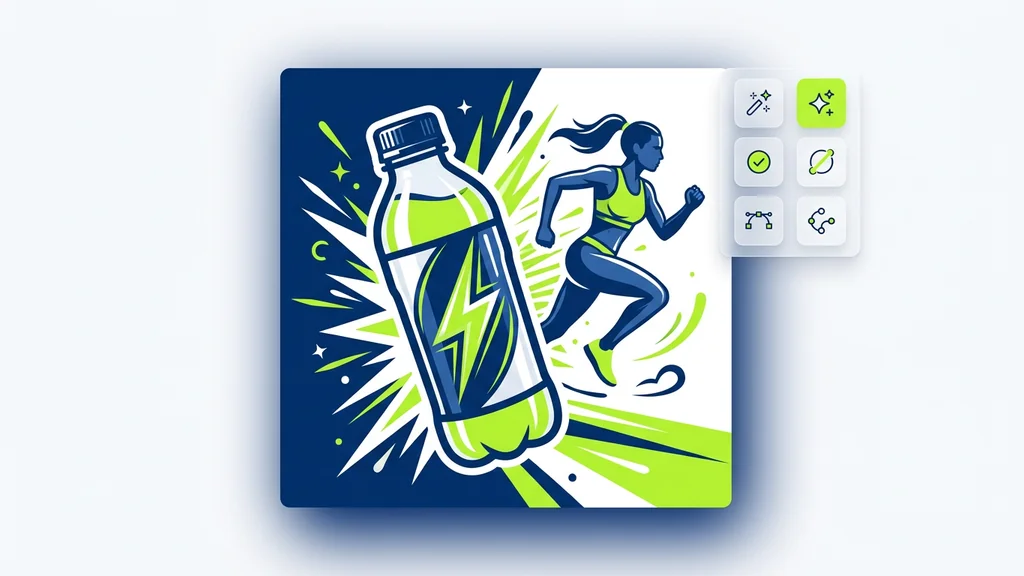
Editorial comparison board showing many quick concept tiles on one side and a single premium final-frame path on the other
Fast is usually the better first stop when the team still needs to choose a direction. Ultra becomes easier to justify later, once the direction is clear and the work shifts from option-finding to premium finishing.
  • Use Fast for first-round ad variation: when you need several options quickly before committing budget or design time.
  • Use Fast for social-format concepting: the official aspect ratios cover the standard formats most teams test first.
  • Use Fast for review velocity: up to four outputs per prompt is a practical fit for small decision rounds.
  • Use Fast before a premium pass: treat it as a route to pick a winner, not always as the last rendering step.

When to compare another image model instead

No useful page should pretend one model wins every job. Imagen 4 Fast is strong when the question is speed. If the question is typography, editing control, or large-format premium output, another page is often a better first stop.

Stay with Imagen 4 Fast

when the job is fast direction-finding, quick concept batches, and standard-sized outputs for review.

Compare with Imagen 4 Ultra

when larger supported resolutions and premium still-image quality are part of the real requirement.

Compare with Ideogram

when readable text, posters, labels, and layout-heavy design matter more than raw generation speed.

Compare with Seedream 4

when you expect the workflow to continue into prompt-based refinements after the first generated result.

Compare with Kontext Pro

when the main task is editing an existing image instead of generating one quickly from text.

Use the image model hub

when you are still choosing between speed-first, typography-first, and edit-first image workflows.

One platform note if you are planning an API integration

As of April 18, 2026, the official Google Cloud guide for generating images from text prompts includes imagen-4.0-fast-generate-001 in a migration table pointing to gemini-2.5-flash-image, and recommends updating image-generation endpoints before June 30, 2026 to avoid service disruption. That does not change how useful Imagen 4 Fast is for understanding a speed-first workflow, but it does matter if you are choosing a long-term production endpoint today.

What to check before you export

Fast output is valuable only if the chosen direction still works when it leaves the generator. Before you export, test the image inside the real placement: square ad card, vertical story frame, landing-page hero, or thumbnail. The winning option in a batch is not always the winning option once the crop, copy, and surface details matter.

  • Check the crop first: Fast is often used for format testing, so make sure the selected option still works in the real placement.
  • Check whether the winner needs a premium second pass: if the direction is right but the finish is not, move to a higher-end route instead of over-explaining the same prompt.
  • Check copy space: quick concept images are most useful when they already leave room for headline or CTA placement.
  • Check whether text readability is actually the problem: if the image depends on readable lettering, use a typography-strong model page instead.
  • Check whether editing is the next step: if the workflow now depends on local fixes, switch to an edit-first route rather than forcing Fast to do the wrong job.

What we verified for this guide

This page is based on primary Google Cloud documentation. The key references are the official Imagen 4 Fast model page, the official text-prompt generation guide, and the official output resolution guide. I deliberately removed unsupported latency claims, made-up benchmark comparisons, unverified pricing assumptions, and platform coverage statements that the official docs do not confirm.

Frequently Asked Questions About Imagen 4 Fast

What is Imagen 4 Fast?

Imagen 4 Fast is Google's fast Imagen 4 text-to-image model on Vertex AI, documented under the model ID imagen-4.0-fast-generate-001.

What is Imagen 4 Fast best for?

It is best for iteration-heavy image work: early concept rounds, ad variation testing, social-format mood tests, and other situations where quick option review matters more than maximum output size.

Does Imagen 4 Fast support image editing?

No. The official support table does not list mask-based editing, mask-free editing, insert or remove object workflows, outpainting, product image editing, or upscaling for this model.

What image sizes does Imagen 4 Fast support?

The official model page lists 1024x1024, 896x1280, 1280x896, 768x1408, and 1408x768.

How many images can Imagen 4 Fast return per prompt?

The official technical specification lists a maximum of four output images per prompt.

What prompt languages are listed on the official page?

The official page lists English, plus preview support for simplified Chinese, traditional Chinese, Hindi, Japanese, Korean, Portuguese, and Spanish.

Why would I use Fast instead of Ultra?

Use Fast when speed, batch review, and standard-sized outputs matter most. Use Ultra when you need the larger officially supported resolutions and a more premium still-image finish.

What official prompt warning should I know?

The official text-prompt guide notes that imagen-4.0-fast-generate-001 can produce undesirable results when the prompt is complex and enhanced prompts are used. For complex prompts, Google suggests avoiding Help me write in the console or setting enhancePrompt to false.