Upload image
or generate it PNG, JPG or Paste from clipboard
Loading library...
Super Promotion
Create stunning AI photos & videos with essential tools
Unlock the Basic Plan for just $1
Auto-renewal is active. Cancel anytime. 90% off applies to the first billing cycle.
By choosing your age and continuing you agree to our Terms of Use and Privacy Policy
Please review before continuing
FLUX.1 Kontext Pro AI Image Editor
FLUX.1 Kontext Pro is not the page to open when your job is mostly “give me a brand-new image from text and I do not care how the edit path works.” It is more useful when you already have an image, a draft, a sign, a product shot, or a character reference and you want to change something specific without throwing away the rest of the scene. In the official Black Forest Labs overview, FLUX.1 Kontext [pro] is described as a previous-generation model that combines text-to-image generation with image editing.
That wording matters because it puts the model in the right mental bucket. Kontext Pro is not just another generic image generator with a fancy name. It is an edit-first model that can also generate from text. The official docs highlight local image editing, character consistency, text editing, and style transformation as its core strengths. If your real task is to change a product color, rewrite copy inside a poster, preserve a character across multiple edits, or restyle an image while keeping the layout intact, Kontext Pro makes much more sense than a page that only promises fast text-to-image output.
There is also one honest caveat we should not hide. As of April 18, 2026, the official Black Forest Labs docs explicitly recommend FLUX.2 for new image generation and editing projects. That does not make Kontext Pro useless. It does mean this page should help users decide when Kontext Pro is still a smart fit, and when they should move straight to a newer route.
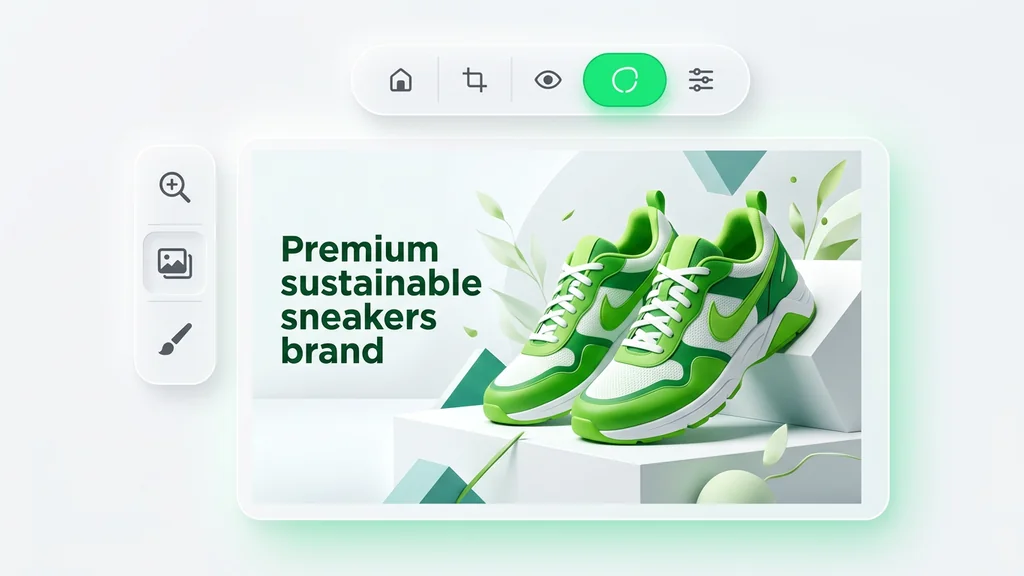
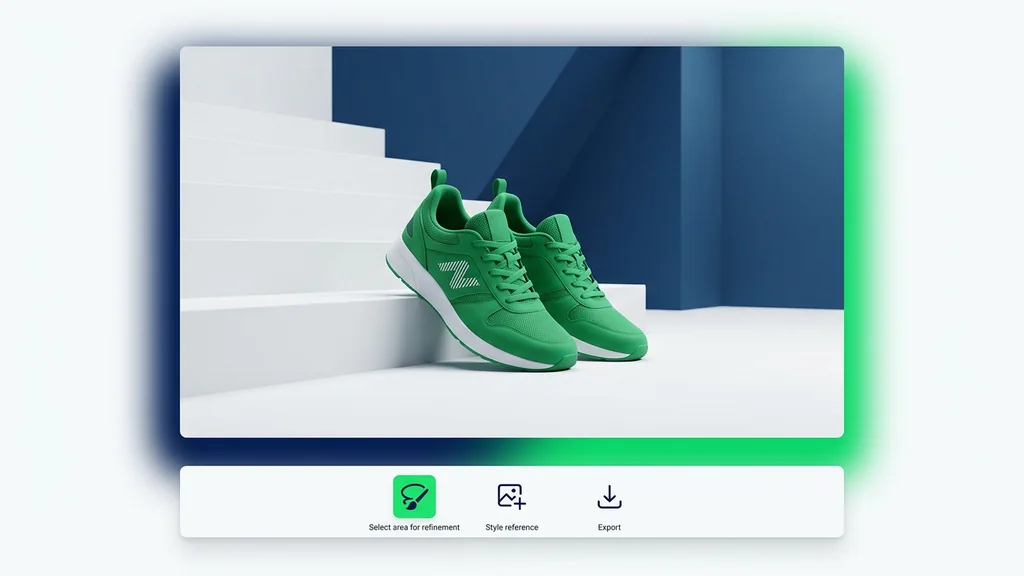
Use FLUX.1 Kontext Pro first when the real job is prompt-based image editing: product recolors, sign text changes, background swaps, iterative character updates, and style changes where most of the image should stay recognizably intact.
The key primary sources behind this page are the official Kontext overview, the official image editing docs, the official text-to-image docs, and the official Kontext image-to-image prompting guide.
What Kontext Pro is actually best at
The fastest way to understand Kontext Pro is to stop thinking about it as a “better image generator” and start thinking about it as a model for prompt-directed image revision. The official editing docs say you can edit images using simple text prompts, without complex workflows or fine-tuning. That is the core value here: you tell the model what should change, and the goal is for the rest of the image to stay stable enough that the edit feels intentional instead of destructive.
In practice, that makes Kontext Pro most useful for marketing assets, product imagery, social creative iterations, and editorial visuals that need selective updates rather than a full reroll. It is also unusually practical for text replacement inside images, because Black Forest Labs documents a direct quoted-text workflow for changing words inside signs, posters, and labels while maintaining the surrounding styling and context.
Local editing without masking-first workflows
The official docs position Kontext Pro as an image editor driven by simple text prompts, which makes quick revision rounds easier for non-technical teams.
Character consistency across turns
The prompting guide explicitly shows multi-step edits that keep the same person consistent across environment, style, and object changes.
Direct text replacement inside images
Black Forest Labs documents a clear quoting pattern for replacing in-image text while keeping styling and surrounding layout intact.
Unified editing and generation
The official overview positions Kontext Pro as a single model that can both create images from text and edit an existing image in the same family.
What the official docs confirm
A strong SEO page is more useful when it is willing to be narrow. The old source article tried to say too much, including unsupported benchmarks, enterprise promises, and vague comparisons. The official Black Forest Labs docs already give us enough verified detail to build a strong page without inventing anything.
| Area | Officially confirmed | What that means for the user |
|---|---|---|
| Model status | The official docs describe FLUX.1 Kontext [pro] as a previous-generation model and recommend FLUX.2 for new image generation and editing projects | Kontext Pro still matters, but new integrations should compare it against a newer Black Forest Labs route before committing. |
| Main capabilities | Text-to-image, image editing, character consistency, text editing, and style transformation | This is not just a generator. It is a unified generation-and-editing model with a strong edit-first identity. |
| Official positioning inside the family | The overview labels Kontext Pro as the fast production-ready option with unified editing and generation, great prompt following, 5-6 seconds generation time, and $0.04 per image | Pro is the balance point in the Kontext family, not the highest-quality tier and not the open-weights research tier. |
| Editing API basics | The /flux-kontext-pro editing endpoint requires both a text prompt and an input_image |
If your workflow starts from an existing image, Kontext Pro fits naturally into that edit loop. |
| Image editing limits | Input image supports up to 20MB or 20 megapixels; image editing tries to match input dimensions rounded to multiples of 32; supported aspect ratio range is 3:7 to 7:3 | It is designed to stay close to the source image dimensions rather than force every edit into a generic fixed canvas. |
| Text-to-image defaults | The text-to-image docs say FLUX.1 Kontext creates 1024x1024 images by default and uses 1:1 when no aspect ratio is specified |
When generating from scratch, Kontext Pro behaves like a roughly 1MP model unless you guide aspect ratio. |
| Output and retrieval | Output formats can be jpeg or png; signed result URLs are valid for 10 minutes |
Operationally, this matters for pipelines that poll results and need to fetch assets immediately. |
| Prompt limits | The official image-to-image prompting guide lists a maximum prompt length of 512 tokens | This is another reason to write precise editing instructions instead of long, messy prompt paragraphs. |
Where Kontext Pro still makes sense in 2026
The easy mistake would be to read “BFL recommends FLUX.2 for new projects” and assume Kontext Pro is no longer worth touching. That is too simplistic. Kontext Pro can still be a strong fit when the user needs a fast, production-friendly edit-first model and the required tasks line up with the official strengths: local modifications, quoted text replacement, style restyling, and iterative character-preserving edits.
It is especially useful for teams that work through revision rounds instead of one-shot final renders. Marketing, product, and content teams often do not need a brand-new masterpiece every time. They need a fast route to change one word, one background, one colorway, one prop, or one setting while keeping the rest recognizable. Kontext Pro is still a very practical answer to that workflow.
| Route | Official positioning | Best fit |
|---|---|---|
| FLUX.1 Kontext Pro | Fast production-ready; unified editing and generation; 5-6 seconds; $0.04 per image | Prompt-based editing workflows where speed and repeatable revision matter more than absolute top-tier output quality. |
| FLUX.1 Kontext Max | Best output quality; industry-leading typography; maximum prompt adherence; premium consistency; $0.08 per image | High-stakes work where typography quality, premium consistency, and top-end output matter more than cost efficiency. |
| FLUX.2 | Black Forest Labs recommends it for new image generation and editing projects; superior quality; multi-reference support up to 10 images; improved text editing; output up to 4MP | New projects that want the current recommended BFL path rather than a previous-generation route. |
Prompt patterns that actually help
The official prompting guide for Kontext is more practical than most AI prompt articles because it focuses on what needs to stay stable. If you want character consistency across multiple turns, Black Forest Labs recommends a simple structure: establish the reference clearly, specify the transformation, and then explicitly preserve identity markers. The guide even calls out a common mistake: saying “her” instead of naming the person clearly.
That advice translates well to real work. Kontext Pro does better when the prompt sounds like an edit instruction, not a poem. Name the thing. Name the change. Name what must stay the same. If the transformation is large, the guide recommends doing it step by step rather than asking for a dramatic leap in one turn.
Use it for local object changes: change one product or prop without rebuilding the whole scene.
Prompt: Change the bottle cap from matte black to brushed silver while keeping the same product shape, label layout, lighting, and background.
Use it for character consistency: preserve identity across multiple turns.
Prompt: Place the woman with short black hair in a rainy Tokyo street at night while maintaining the same facial features, hairstyle, eye shape, and expression.
Use it for text replacement: follow the official quoting structure.
Prompt: Replace 'SUMMER SALE' with 'FLUX DROP' while maintaining the same font style, color, and placement.
Use it for bigger restyles: go step by step instead of asking for everything at once.
Prompt: Transform the portrait into a claymation style while preserving the same person, then use that output as the base for the next scene change.
Text editing and annotation boxes are two of its most practical strengths
The official editing docs and prompting guide are unusually specific on two high-value workflows. First, text editing: BFL explicitly recommends quotation marks around the text you want to change, using the structure Replace '[original text]' with '[new text]'. They also note that text editing works better when fonts are clear and readable, and when the replacement text length stays reasonably close to the original layout.
Second, annotation boxes: the official docs explain that bright colored boxes can be used as visual annotations for targeted local editing, especially when text edits require repositioning or resizing. Kontext Pro automatically acknowledges those boxes when they are part of the input image, and removes them in the output. That is a very practical detail for teams editing banners, posters, packaging, and ad layouts.
| Task | Official best practice | Why it matters |
|---|---|---|
| Text replacement | Use quotes: Replace 'old text' with 'new text' |
It gives the model a clean edit instruction instead of a vague request about typography. |
| Typography preservation | Specify preservation when needed, for example: keep the same font style and color | Without this, the edit may solve the wording but drift on styling. |
| Layout stability | Keep replacement text length similar where possible | Large length swings can distort spacing and placement. |
| Targeted local edits | Use bright colored annotation boxes for reference | This helps with repositioning and resizing edits in busy layouts. |
When to compare another model instead
No useful page should pretend Kontext Pro is the universal answer. Black Forest Labs already tells us that FLUX.2 is the current recommendation for new projects. The more interesting question is what to compare when Kontext Pro is not the cleanest fit for the user’s actual job.
Stay with Kontext Pro
when the real workflow is iterative image revision and you want fast, prompt-based edits on an existing image or reference.
Compare with Kontext Max
when premium consistency, stronger typography, and maximum prompt adherence matter more than Pro’s speed-cost balance.
Compare with FLUX.2
when you are starting a fresh Black Forest Labs integration today and want the officially recommended current-generation route.
Compare with Imagen 4 Fast
when the job is mostly new image generation and fast direction-finding rather than editing a source image.
Compare with Ideogram
when highly readable poster text, label design, or layout-heavy typography is the main reason for choosing a model.
Use the image model hub
when you are still deciding between edit-first, text-first, and generation-first image workflows.
Operational details worth knowing before you build on it
The official API docs give several practical details that are easy to miss if you only skim the marketing page. For image editing, Kontext Pro expects both a text prompt and an input image. For text-to-image, it defaults to 1024x1024 unless you set an aspect ratio. For editing, it tries to stay close to input image dimensions, rounded to multiples of 32, unless you override with aspect_ratio.
The docs also note that result retrieval is done through a polling flow, and that the signed output URL is only valid for 10 minutes. None of this is glamorous, but it matters for production reliability. If you are designing an internal tool or automation around Kontext Pro, these small operational facts will matter as much as the image quality.
- Editing requires an
input_image: this is an edit-first API path, not just a prompt-only route. - Input image limits are real: the official docs list up to 20MB or 20 megapixels for the source image.
- Aspect ratio has a defined range: the official supported range runs from
3:7portrait to7:3landscape. - Outputs are about 1MP total: both editing and generation should be planned with that scale in mind.
- Retrieve outputs promptly: the signed result URL expires after 10 minutes.
What to check before you ship the edit
Good edit-first pages should end with user judgment, not blind trust. Kontext Pro can preserve a lot, but the final responsibility still sits with the human reviewing the output. Check the typography, check whether the subject identity really held, check whether the changed region blends cleanly into the untouched areas, and check whether the prompt solved the real business problem instead of simply producing something different.
- Check that the unchanged areas still look unchanged: a good Kontext edit should not feel like an unnecessary rerender.
- Check text edits for spacing and length drift: even good text replacement may need human review in tight layouts.
- Check identity markers after multi-turn edits: hair, face, proportions, and expression should still feel like the same person.
- Check whether the job has become too ambitious for one turn: large transformations often work better as multiple smaller edits.
- Check whether a newer or different model is now the better fit: if the project evolves into a new integration or premium output requirement, the right answer may no longer be Kontext Pro.
What we verified for this guide
This page is grounded in primary Black Forest Labs documentation: the official Kontext overview, the official image editing documentation, the official text-to-image documentation, and the official Kontext prompting guide for image-to-image. I removed unsupported benchmark claims, third-party platform sprawl, speculative hardware and pricing guidance that was not necessary to understand the model, and comparisons that were presented as fact without primary-source backing.
Frequently Asked Questions About FLUX.1 Kontext Pro
What is FLUX.1 Kontext Pro?
According to Black Forest Labs, FLUX.1 Kontext [pro] is a previous-generation model that combines text-to-image generation with image editing.
Is Kontext Pro mainly an image generator or an image editor?
It can do both, but the strongest practical reason to choose it is prompt-based image editing with context preservation rather than generic from-scratch generation.
What can Kontext Pro officially do?
The official overview lists text-to-image, image editing, character consistency, text editing, and style transformation.
What does Black Forest Labs recommend for new projects?
The official docs recommend FLUX.2 for new image generation and editing projects.
How do text edits work in Kontext Pro?
The official docs recommend quotation marks around the exact text change, for example: Replace 'old text' with 'new text'.
Can Kontext Pro preserve the same character across multiple edits?
Yes. The official prompting guide explicitly presents character consistency as a strength and recommends naming the reference clearly while preserving identity markers such as facial features and hairstyle.
What are the editing input limits?
The official editing docs say input_image supports up to 20MB or 20 megapixels.
What output size should I expect?
The official docs describe outputs as roughly 1MP total, with text-to-image defaulting to 1024x1024 unless aspect ratio is specified.
What is the official price and speed position of Kontext Pro?
In the official overview, Kontext Pro is positioned as the fast production-ready option with 5-6 seconds generation time and $0.04 per image.
When should I compare Kontext Max instead?
Compare Kontext Max when top-end typography, maximum prompt adherence, and premium consistency are more important than Kontext Pro’s speed-cost balance.